Field Trips for GSOC Members
GSOC members can attend geological field trips led by professional geologists.
Field trips include both short local field trips and more adventurous multi-day overnight trips. Most trips require registering participants to be GSOC members. Registrants should be logged in before attempting to register.
GSOC is planning and organizing field trips for summer/fall of 2026. Please stay tuned for more information, which will be announced in the monthly email to members. The posted schedule on the GSOC home page will be uploaded and revised and official trip descriptions added below in the Field Trips preparing for registration section below as plans are set.
Members should receive an email on the registration kickoff date that will contain a registration link. Registration dates are shown on the field trip schedule on the home page of the website. Members should use the button on the email to register - please disregard the button shown on the website because our membership platform adds those automatically and they don’t go to the right page for signup. Each member will only be able to register themselves and one guest. If you want to go, register as soon as possible because our trips are popular and sell out quickly.
Field Trip Preliminary Descriptions
This section is included to give prospective field trip participants preliminary information about trips being planned, so they may reserve (refundable) lodging accommodations and add the trips they are interested in attending on their calendars. Most GSOC field trips are self-catered (we do not provide food, lodging, or transportation). We cannot guarantee that everyone who wants to participate on a particular trip will be able to register, as participation on most field trips is limited due to space requirements. Further information will be revealed in the registration section below these preliminary descriptions prior to commencement of registration.
GSOC-hosted trips are completed for 2026. Check back for information about upcoming 2027 field trips.
Geology Trip hosted by Malheur Field Station
GSOCers - save the dates of October 2-5 for geology trip led by retired USGS geologist David Sherrod and hosted by Malheur Field station. October 2 and 5 will be travel days and Sherrod will lead the trip on Saturday and Sunday, October 3 & 4. Participants will have to provide their own transportation to and from the Field Station and Malheur will provide vans on Oct 3 & 4. Lodging will be provided in the Field Station. See link below.
Upcoming Field Trips Preparing for Registration
GSOC Members, you should be receiving an email from GSOC on the date that a field trip opens for registration. Please use the link on the email to register, and make sure you are logged in to our membership platform prior to your registration attempt. Contact Barbara or Carol if your attempts to register aren’t working.
Powered by Wild Apricot Membership Software
Field Trip Recaps
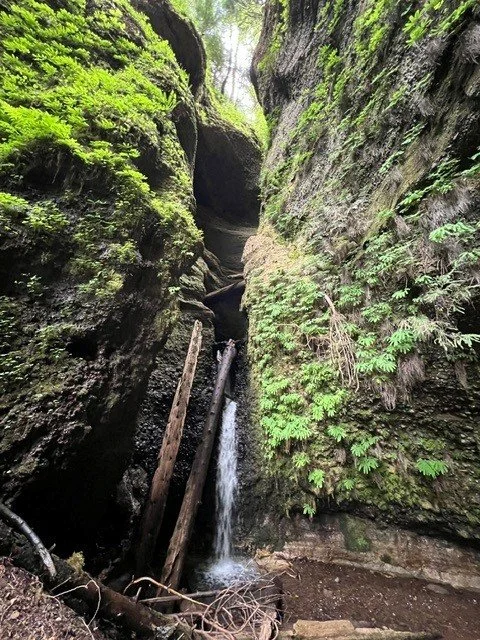
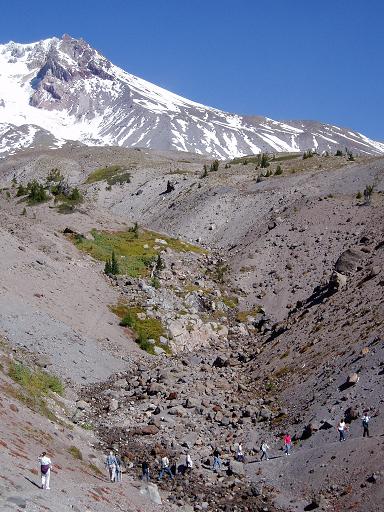
This one-day field trip was a hike into the eastern terrace of the Sandy River Canyon, and was led by Ian Madin, retired Senior Scientist from Oregon Department of Geology and Mineral Industries. The target geology was the material deposited between 16 and 2 million years ago (Ma) above the Columbia River Basalt which underlies the Portland basin.
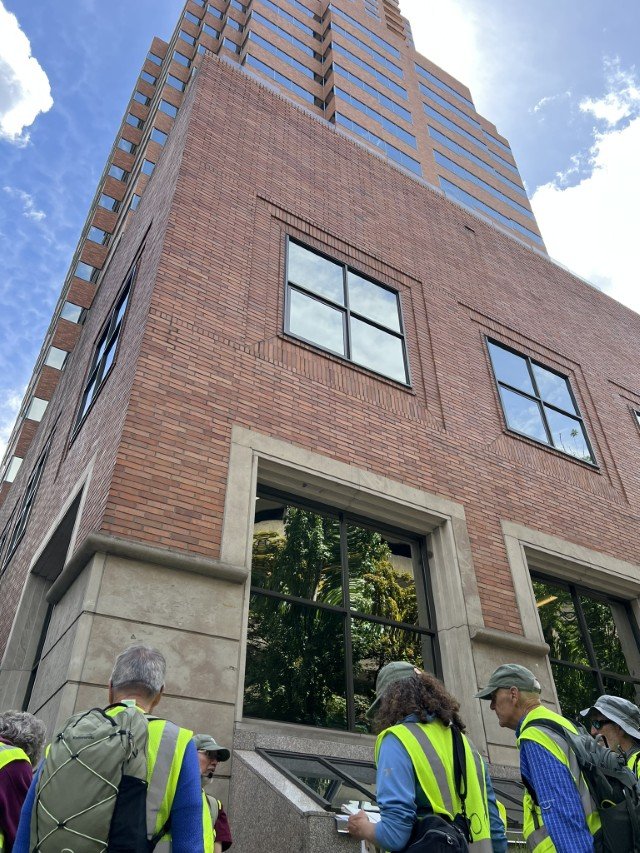
GSOC revisited Portland downtown buildings this summer by going on the Building Stone South Tour for the first time in three years. GSOC Communications Director Paul Edison-Lahm and GSOC President Julian Gray led two small groups through the sidewalks of downtown Portland on the tour. Beautiful weather made the experience a very pleasant one.
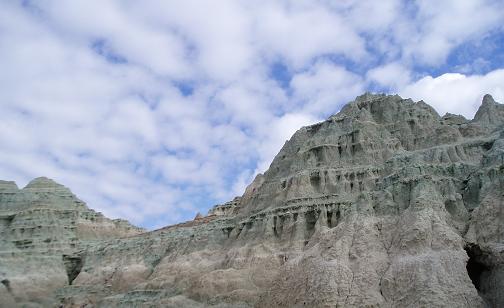
Early fall is a perfect time of year to explore the unique beauty of the John Day Fossil Beds area. We convinced 20 GSOC members, both newbies and seasoned veterans alike, that this was the case. So, on September 25 Derek Loeb, geology lead, Carole Miles, logistical lead, and Gary Joaquin, safety lead, met up with the group at the Clarno Unit picnic area. Following introductions, safety reminders, and distribution of field guides, we launched on the first activity — a short hike along the Geologic Time Trail to learn about the formation of and admire the striking Clarno Palisades. The Palisades are part of the Clarno formation — volcanic lava flows, tufts, lahars, mudstones, and conglomerates from the early to middle Eocene.
PRESS RELEASE RELATED TO THE DEEP TIME FIELD TRIP FROM THIS SUMMER!!!
Nick Zentner is poised to do an A to Z series on Alaska geology this winter (2025/2026). As a preface to that, he has begun a preliminary series of interviews on the geology of the Belt Supergroup of Washington and related rocks. In two of these interviews, Jacqueline Halpin of U Tasmania and Rich Gaschnig of U Mass Lowell, he investigates the origin and composition of the Belt Supergroup and its relation to the other pieces of the supercontinent Nuna that were adjacent to the Belt during its formation. Also, material about the relationships between supercontinents Nuna and Rodinia.
The GSOC field trip Deep Time in the Spokane area delved into these topics and relied heavily on the first two field trips of the May 2024 GSA Cordilleran Section meeting, the articles for which were published in the GSA Field Guide 69: Proterozoic Nuna to Pleistocene Megafloods, edited by Mark McFaddan and the Deep Time trip leader Chad Pritchard of EWU Cheney. Rich Gaschnig was the lead author listed on the first field trip in that publication. The Deep Time trip covered 4 of the stops on the Gaschnig et al trip, where we saw the oldest exhumed rocks on the trip. The GSOC Field Trip and Outreach Directors will also get the field trip guide available on the members only section of this website, a good background summary of the geology of the region written in terms more easily understood by geo-neophytes, sometime this week (September 29).
Click below to look at a post-trip article with pictures of some of the stops from the trip and please check out the Zentner interviews.
March 9, 2025
Attendees at the 90th GSOC Annual Banquet were treated to a fun and informative lecture by one of the country’s prominent petrologic mineralogists, Dr. Barbara Dutrow. She came to talk to GSOC about her passion for using the unique properties of the mineral tourmaline to further geologic research.
September 28, 2024
A significant portion of the terrain of Portland’s West Hills between Burnside Road and US 26 is ancient and active landslides. Dr. Scott Burns, professor emeritus of Geology at Portland State University, took GSOC participants on a field trip exploring this terrain and observing the mitigation methods used over the years to try and arrest the sliding and damage. Dr. Burns has trained quite a few geologists about landslides over the years he has taught at PSU, and many of his students are now cataloguing and mitigating landslides throughout the Pacific northwest and other areas of the country.
June 7-9, 2024
In the June 2024 field trip, GSOC participants were treated to explore some of the geological fieldwork and mapping done by Jason McClaughry and field trip leader and GSOC Past President Clark Niewendorp of DOGAMI over the years 2014-2020. The main subject of the field trip was volcanic materials that originated in the Mt. Hood area of the High Cascades and were deposited on the eastern flanks of these mountains in Wasco County between The Dalles and Tygh Valley from the Late Miocene onwards. All this volcanic material is underlain by a platform of Columbia River Basalt. Also, the group examined the effects of folding and faulting associated with the Yakima Fold and Thrust Belt. Late Pleistocene surficial deposits – notably wind-blown loess and megaflood sediments – completed the surface geology they saw in the area.
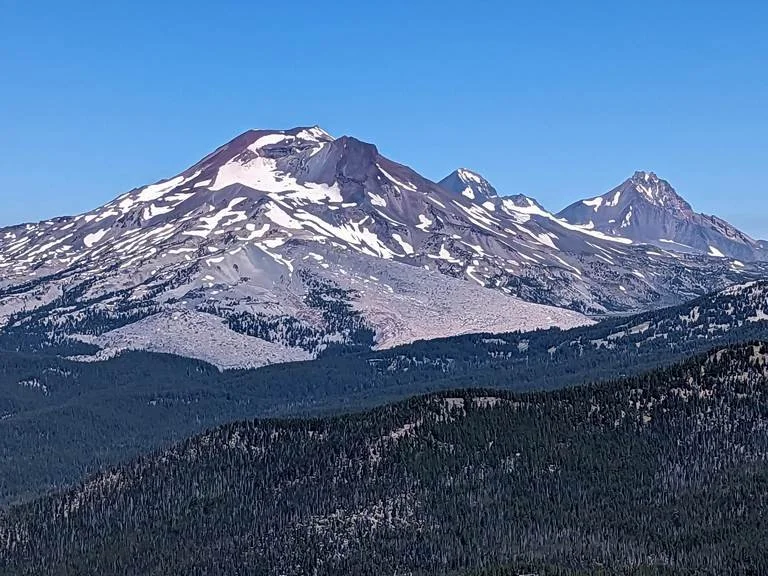
Sheila Alfsen and Daniele Mckay led us on this 2 day field trip with picture-perfect weather. Why the name “Two Cascades”? We drove through the eroded steep sections of the older West Cascades, then went on to the High Cascades to Bend to explore the area around Mt Bachelor. A highlight of the trip was the view from mid-way up Mt Bachelor.
The GSOC Annual Picnic enjoyed a good turnout this year at Beacon Rock State Park in the Columbia River Gorge. GSOC had not sited the picnic here for over 20 years, and members agreed that this was a very good venue for a picnic. Not only did the site have a serviceable enclosed shelter building, but also a great view of some outstanding geology – Beacon Rock, a remnant of the last known outpouring of Boring lava, dated at 58,000 years ago.
This trip began in the mind of GSOC member Dr. Benjamin Sloan after he joined the society last year and participated in the Coaledo trip last summer. By September he was emailing me and asking whether we would consider doing a trip to Crater Lake. I replied that we’d consider the trip, then added a long list of logistical considerations that needed to be worked out, thinking that would be the last I’d hear from him. Well, one month later he had researched the technical papers, gone to Crater Lake to research lodging and travel routes, and sent me a list of tasks he’d completed. Turns out that Ben has been planning field trips worldwide and teaching geology for years as well as doing oil exploration.
story text by Carole Miles
photos by Carole Miles, Denny Chamberlin, and Kate Ely
The Strawberry Mountain fault was discovered in 2019 by DOGAMI’s Ian Madin upon reviewing new LiDAR maps of the area. Andrew Dunning, looking for a project for his master’s thesis at Portland State University, realized that a lack of high-quality seismic data in this area of Oregon may have erroneously led to an inaccurate assessment of the seismic risk in Eastern Oregon on the USGS National Seismic Hazard Map. He has been working on gathering data related to timing and offset of the Strawberry Mountain fault for the past two years. He was excited to take GSOC members into the field to show us what he has learned.
Recap of the GSOC Willamette East Bank Bike Geotour - June 26, 2022
GSOC participants of the 3rd Eastbank Bike Geotour field trip met on the morning of Sunday, June 26, in order to complete the tour before the 90+ degree temperatures of the hottest day of the year (so far) set in. This tour had not been run in three years due to the pandemic, and the leaders included Ian Madin, who just retired from DOGAMI, and Dr. Lalo Guerrero, who teaches geology at Portland Community College. Take a journey with the group and think about biking it for yourself!
Recap of the GSOC Willamette Valley Transect Geotour - June 18, 2022
Thirteen happy participants of 2022’s first GSOC field trip piled into the back room of the Bear Creek Pizza parlor in Molalla this past Saturday night to eat dinner and sketch up their conclusions from the day’s journey across the Willamette Valley. GSOC Past President and Programming Director Sheila Alfsen led the group from Erratic Rock State Park on the west side of the valley to the Molalla Rosette to the east of the valley in more or less a straight line. The purpose of the trip was to observe the landforms of the Willamette Valley, concentrating on the fluvial processes at work in the sediments of the valley floor.
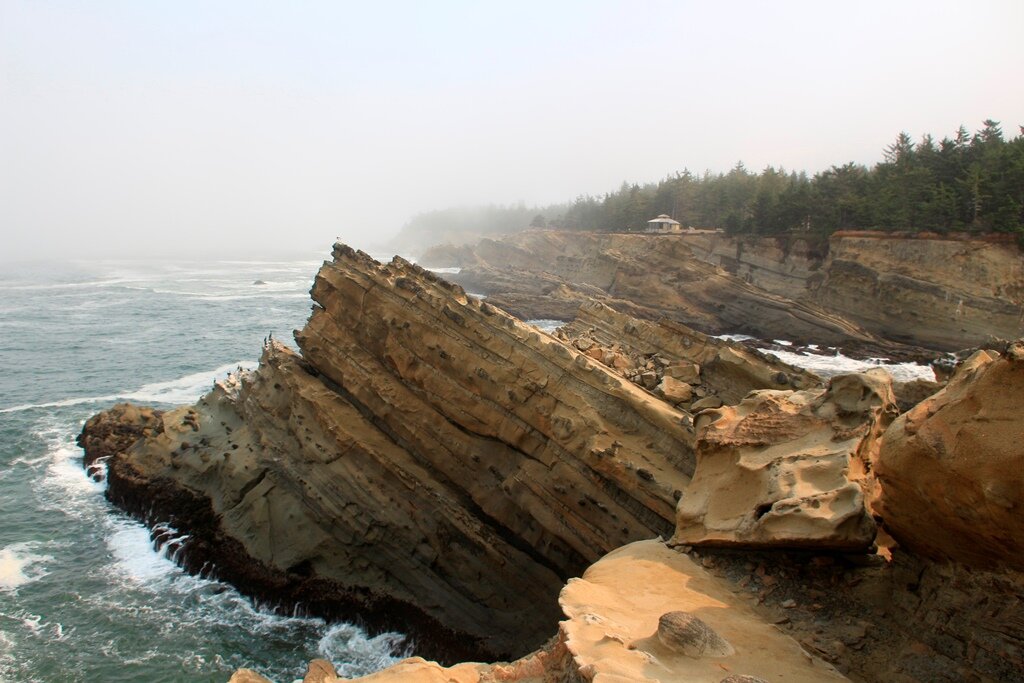
The Coaledo Formation field trip began about two years ago when Dr. John Armentrout, a native Oregonian and sedimentary basin stratigrapher with a long career at Mobil Oil, came to talk to GSOC about a project he was working on. He was revisiting a part of Oregon that he had studied in the early days of his career, the Coaledo Formation centered in the Coos Bay and Cape Arago areas. He had assembled a team of researchers from the University of Oregon and elsewhere to work on the multidisciplinary project. And he proposed the GSOC field trip as a precursor to a GSA field trip he would be organizing for the GSA annual meeting in 2021.
So, we were all preparing to go on the trip in August 2020 and then COVID struck. We subsequently revised the trip date and finally this year got the trip ready to go. It turned out to be quite a fun trip and well worth the wait!
With forecasts in the Willamette Valley due to surpass 115 degrees, suddenly a four-day geology field trip in traditionally hot Central Oregon seemed to be a very cool place to visit indeed! So, off to the (relatively) cool hills and mountains surrounding Prineville and John Day did 25 geologists and geologist-wanna-be’s travel. Led deftly by three intrepid women: Carol Hasenberg (primary trip organizer), Carrie Gordon (Day 1 & Day 4 Geologist) and Emily Cahoon (Day 2, 3 & 4 Geologist), the group caravanned in up to 14-vehicles to incredibly important and fascinating geologic formations that only friends-of-rocks and aficionados-of-prevailing-geologic theory would appreciate!
Under threatening skies, 12 GSOC adventurers and 4 Ouzel guides with raingear nearby shoved off from the banks of the John Day River near Service Creek.
by Carol Hasenberg
What do you do when you can’t go on a GSOC field trip?!? Well, my husband John and I have been watching Nick Zentner do his video thing all spring and summer on YouTube, and we really wanted to see some of the features of Washington state that have been highlighted on the series. So, we decided to go ourselves to eastern and central Washington and see some of this geology. This article is an interactive travelogue of that adventure!
by Teresa Meyer
For those of us who were fortunate enough to participate in the Wallowa GSOC field trip, along with stunning geology we were immersed in an abundance of wildflowers. We were surrounded by an unbelievable variety of wildflowers everywhere we went. At any one time you could stand still and see more than a dozen or more different flowers surrounding you.
How to Prepare for a GSOC Field Trip
Appropriate dress and protection: Bring boots or sturdy, closed-toe shoes, raincoats, layered clothing even if it's not raining. Be prepared to get wet and muddy. Consider bringing insect repellent or sunscreen if conditions necessitate such items.
Pack a lunch on one-day trips unless a lunch destination is announced, then bring lunch money.
Participants will be required to sign a liability waiver form at the meetup point for the trip.
You must be a member of GSOC to register for most GSOC field trips. Members may bring a guest to accompany them. Become a member of GSOC!
A registration fee will be charged on GSOC field trips. Refer to the trip descriptions on this page for the fee and cancellation policy. Click on the registration link on the announcement email you receive on the registration opening day to sign up and pay the fee.
We encourage carpooling and ask carpoolers to share the cost of the gasoline for the vehicle in which they are riding. On some trips, carpooling will be required from the meetup point.
Please read your trip announcement and confirmation emails. They contain important information about the trips.
Our Previous Adventures
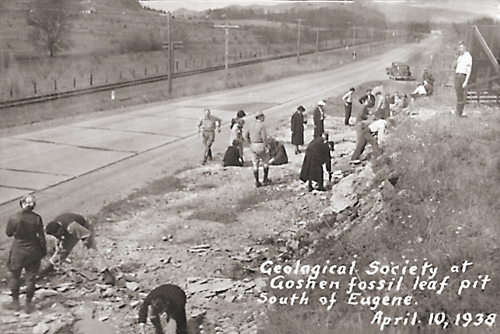
For safety and legal reasons, membership is required for most GSOC field trips.
Learn more about becoming a member.

Field Trip Director
Annual Newsletter Editor
fieldtrips@gsoc.org