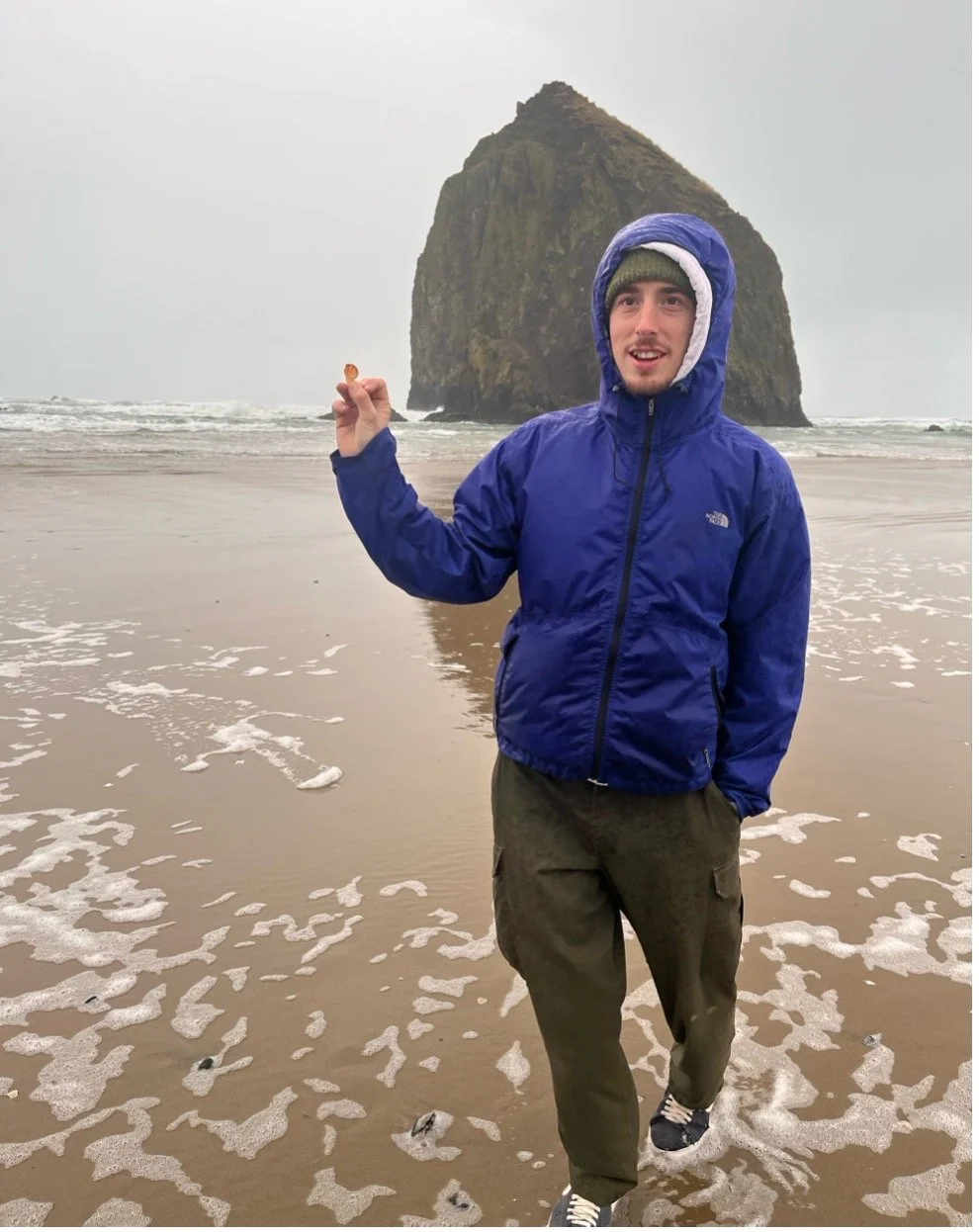
Cody Wilbur, MS candidate
/
The hillslope processes that shape the mountainous terrain of the Pacific Northwest have contributed significant changes to the region’s river systems. In September 2017, a large wildfire burned the mountainous terrain cradling Eagle Creek, a tributary to the Columbia River. Since the fire, Eagle Creek has begun the process of recovery. Previous post-fire research has found that the characteristics of hillslope processes are altered by wildfire but expected to return over time, however stream process responses are less understood. This study looks to quantify the changes and downstream impacts these processes have had on Eagle Creek following the fire.
I am working mainly in cloud compare to align the first set of terrestrial lidar scans, TLS, and the final set so that I can identify the net volume change over the course of the study. This has been through several rounds of editing the scans through different methods to create a merged pointcloud of all the TLS site location within the study reach. Due to the number of points taken and some lack of fixed structures to align to, this part of the project has required more time to calculate the net volume but also accurately show the change in bed from the of end reach. I am still in the process of calculating the net volume change and creating a map figure to best show my results. Afterwards I will begin writing, contact research partners, and perform some outreach of the results to the fish hatchery at the mouth of eagle creek.
I plan to present my project results at the end of Spring term 2026 at Portland State University.