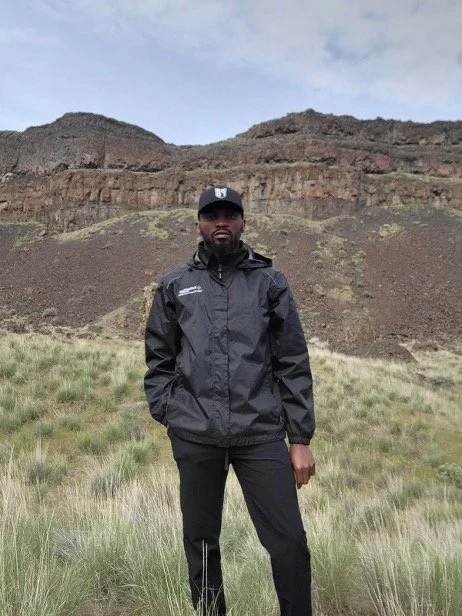
Obinna Ozioko, PhD candidate
/
My second project focuses on understanding a major earthquake that happened in Oregon roughly 1,000 years ago and what it might tell us about future earthquake risks in the region. Specifically, we’re looking at the Gales Creek Fault (GCF), a major fault line located west of Portland. While this fault hasn’t produced a recorded earthquake in modern times, previous studies have shown it has caused at least three big earthquakes in the last 8,000 years. The most recent one occurred between 1168 and 853 years ago. The aim of this study is to better understand how strong that earthquake was and how much shaking it caused, so we can better prepare for future ones. Earthquakes often cause landslides, especially in steep and mountainous areas. When a strong earthquake hits, it can trigger dozens or even thousands of landslides. These landslides can leave behind physical evidence on the landscape for thousands of years. By studying the shape and age of these landslides, we can learn more about when and where they happened—and possibly what caused them. Using mapped landslides near the Gales Creek Fault, we will estimate how old each landslide is based on how "rough" its surface looks in high-resolution maps made from lidar. In this project, we’ll improve that method by collecting new field data and then use it to figure out which landslides happened around the time of the most recent GCF earthquake. Once we identify landslides from that time, we’ll take another step to figure out which of them were probably caused by the earthquake itself. Using a new technique that looks at the position of the landslide and its characteristics to figure out whether they were more likely caused by shaking from an earthquake rather than from heavy rainfall. We’ll use this method to narrow down the list to just those most likely to be earthquake-triggered landslides. By mapping out where these earthquake-triggered landslides occurred and how close they were to the fault, we can estimate how far the earthquake shaking reached. Then, we’ll use known relationships between earthquake size and the area affected by landslides (based on data from more recent earthquakes) to estimate the magnitude of the GCF earthquake. This approach provides a new, independent way to estimate earthquake size—different from traditional methods that rely on how much the fault slipped or how long the rupture was. This research will help improve our understanding of how dangerous the Gales Creek Fault could be in the future. We’ll share the results with Oregon’s geological agencies, earthquake hazard modelers, and the public. Knowing more about how the last earthquake behaved helps scientists make better predictions about future quakes, including how strongly they might shake the Portland area.
My initial Puget Lowland project has been completed. I gave a presentation to GSOC during a geology hour on this in 2024.
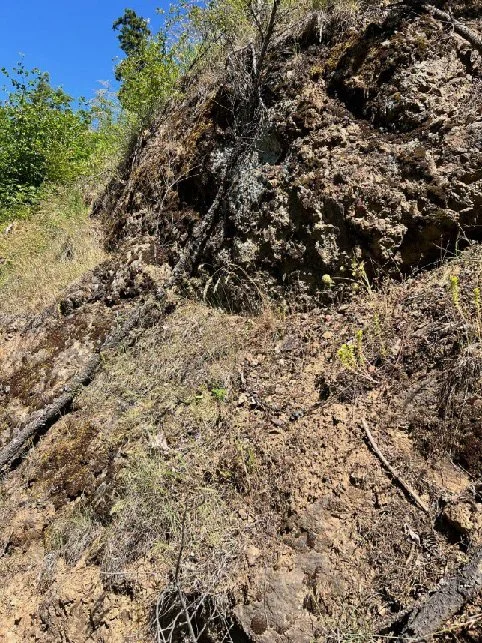
Since the summer, we’ve made significant progress on my (second) Gales Creek Fault project. We have now mapped more than 9,000 landslides across the GCF region, greatly expanding the initial inventory that supports my dissertation work. We also completed extensive fieldwork and radiocarbon sampling, focusing on key landslides that will help establish age controls on the landslides.
At the moment, we are waiting for the radiocarbon results to return from the lab, and I’ve begun the initial analysis of the mapped landslides as we move toward integrating them into the broader fault history framework.
Based on the current timeline, I am projecting completion in 2026.