2026 Downtown Portland Building Stone Field Trip - South Tour
/Trip Date: June 7, 2026
Trip Leader: GSOC Communications Director Paul Edison-Lahm and GSOC President Julian Gray
Article by Carol Hasenberg
Photos by Carol Hasenberg
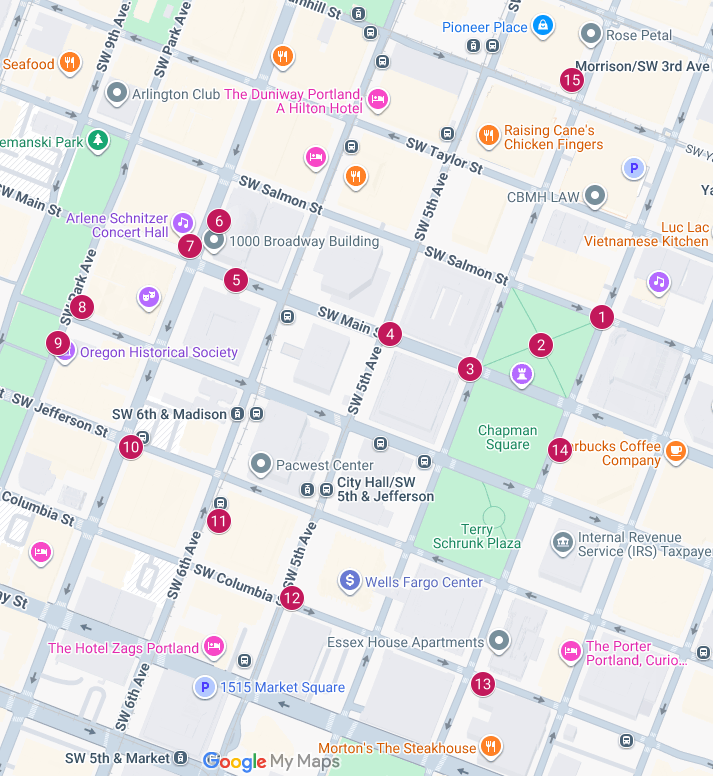
Route of the 2026 Downtown Portland Building Stone South Tour. Stops are shown in the red numbered circles.
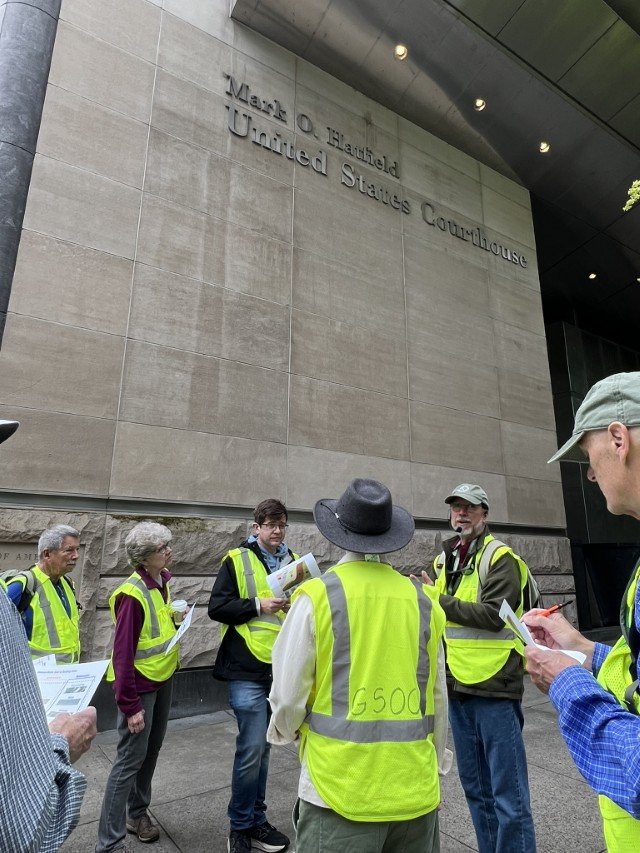
1. Mark O. Hatfield United States Courthouse (1997)
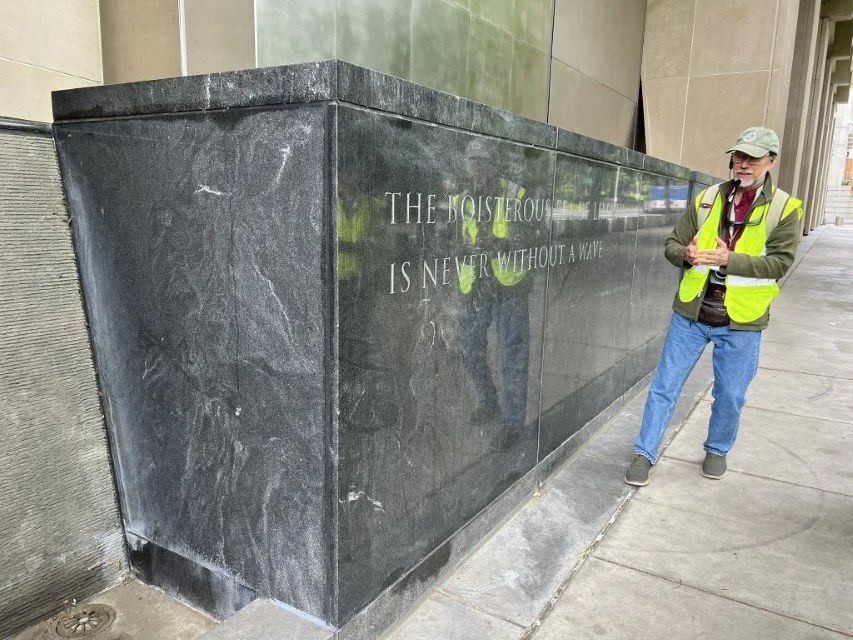
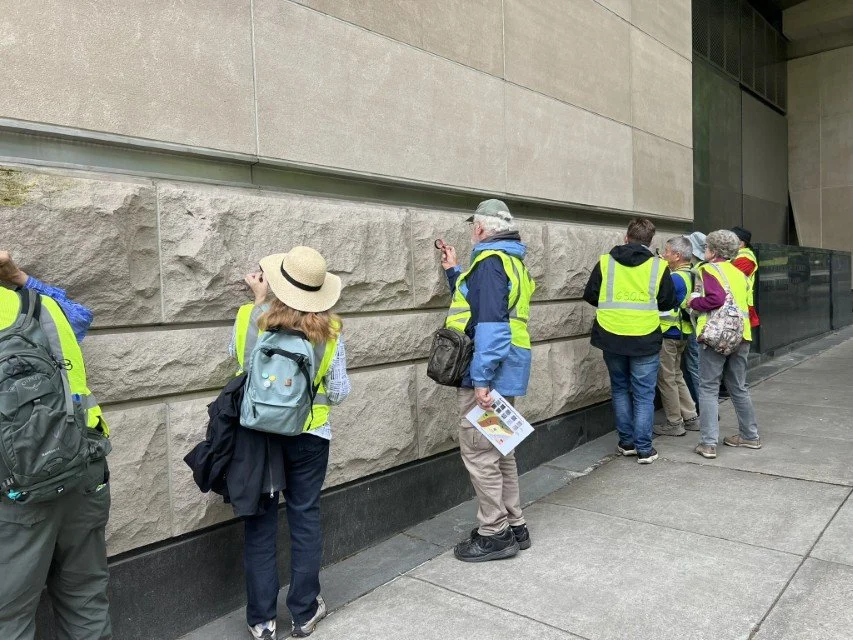
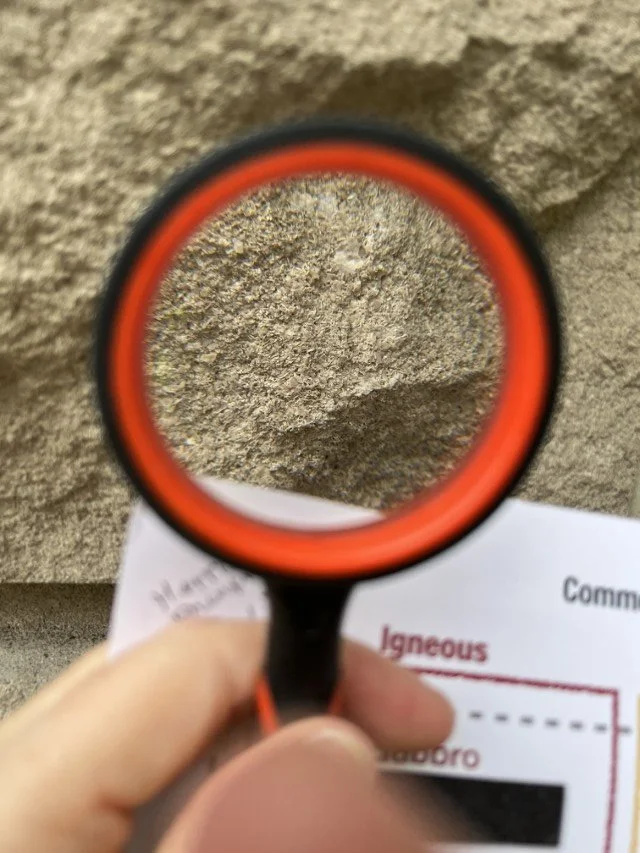
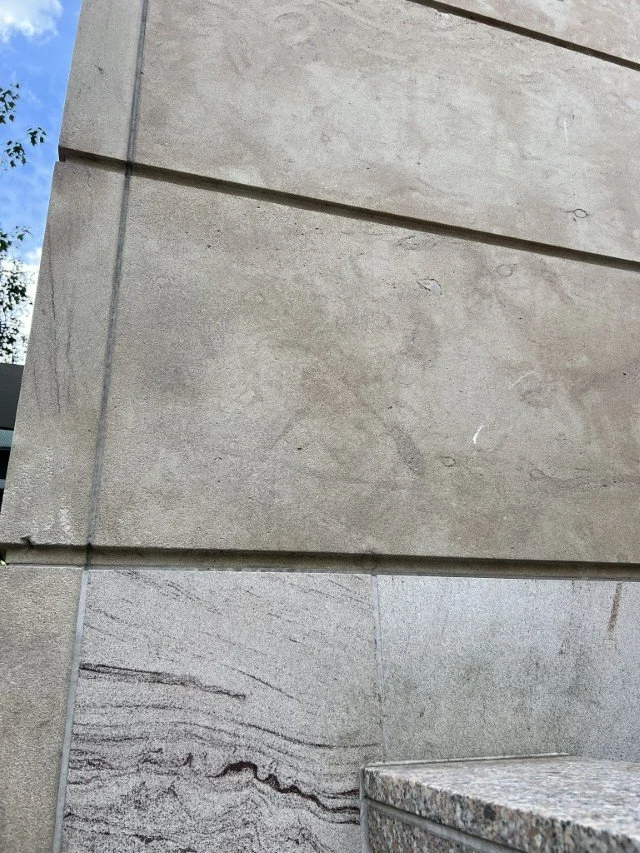
The walls and floor tiles of this federal courthouse are a swirled gray-and-white migmatitic gabbro below blocks of light brown Spergen limestone of Mississipian age (330 Ma). This bioclastic limestone is from a warm shallow high-energy tropical sea (similar to the present-day Bahamas, for example) and is composed of snails, crinoids, and bryozoa (noodle shaped or “wheat chex”-like). Also included are tiny egg-shaped ooids, made of concentric rings of calcium carbonate which formed around sand grains or other small fragments as they were rolled by wave action on the shallow tropical sea floor.
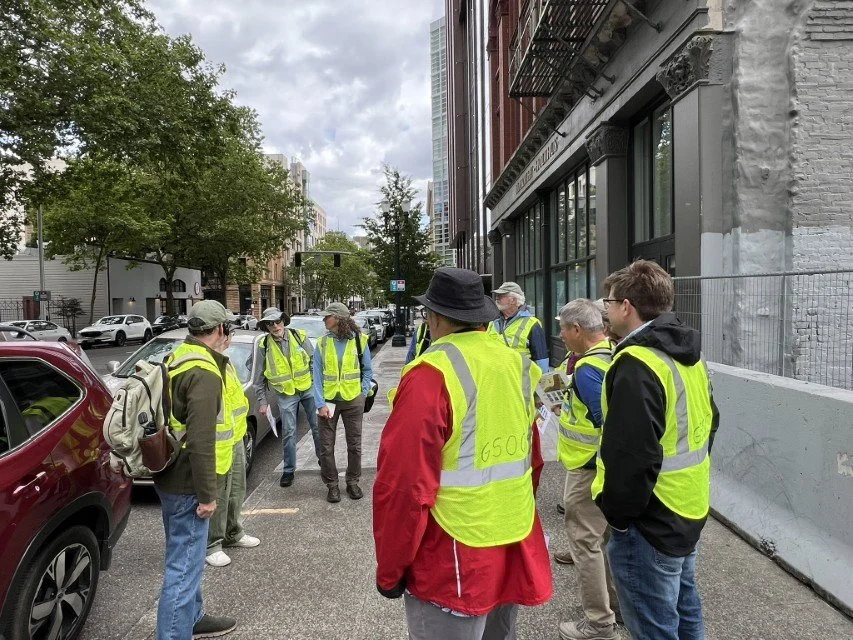
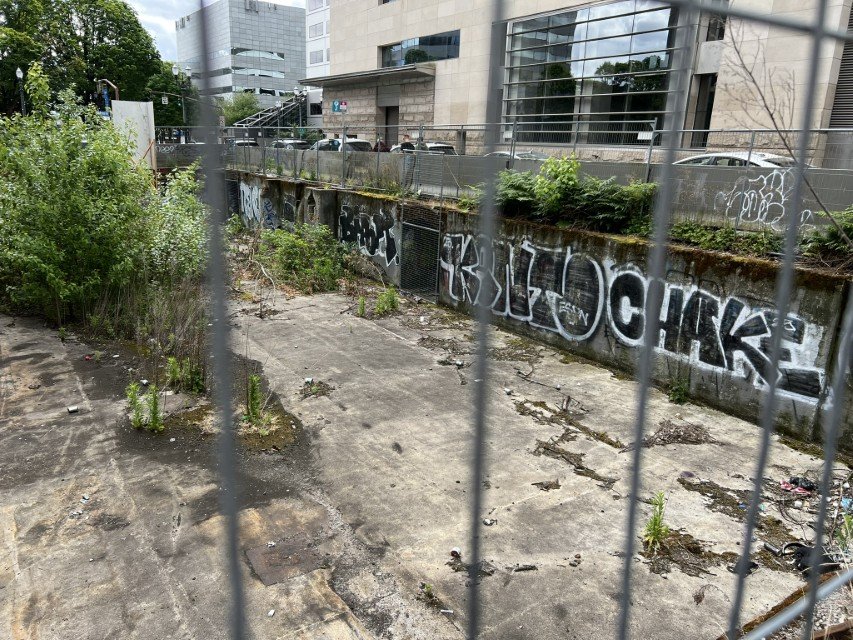
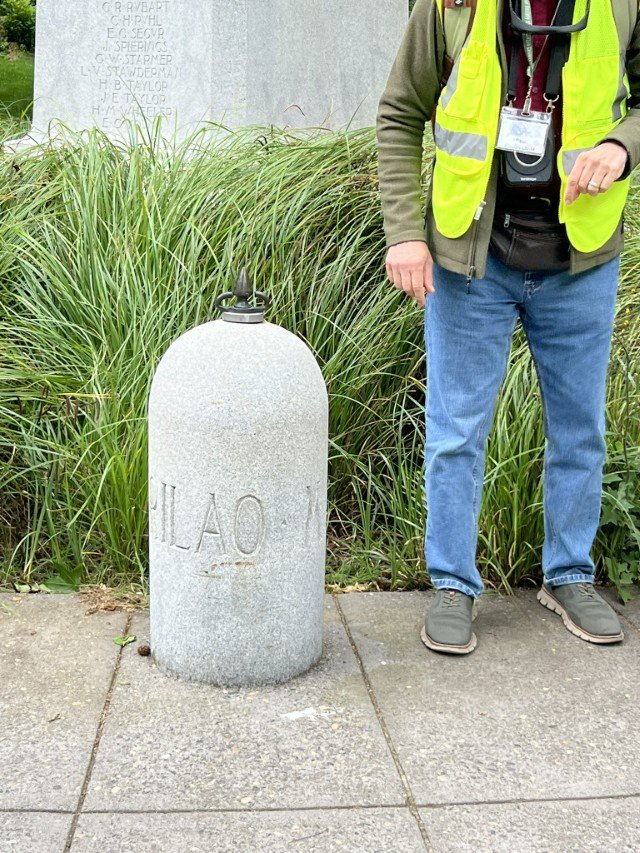
Above and Below: Lownsdale Square bollards
2. Lownsdale Square bollards
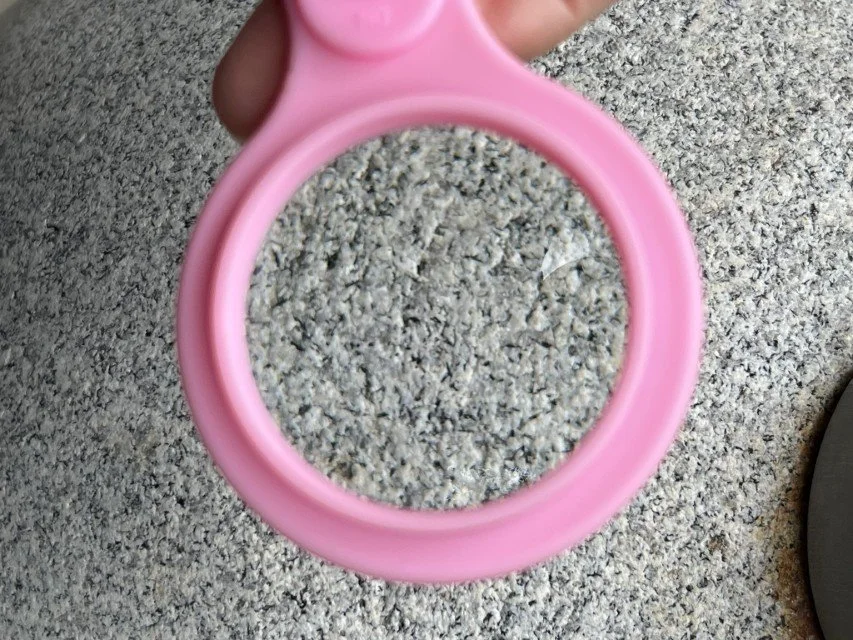
The stone bollards surrounding the Spanish-American War Soldier’s Monument (1906) in the middle of the square are composed of granodiorite, a light-colored granitoid rich in plagioclase feldspar.
3. Portland City Building (1982)
This building is faced in a veneer of clay tile, a product whose origin is the weathering of basalt rock.
4. Stone wall outside of The Standard Insurance Building (1962)
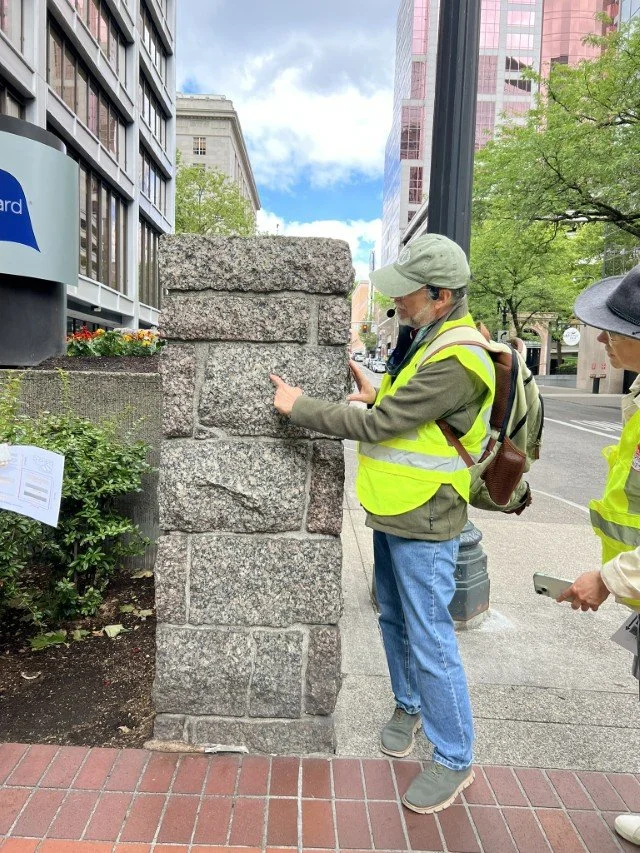
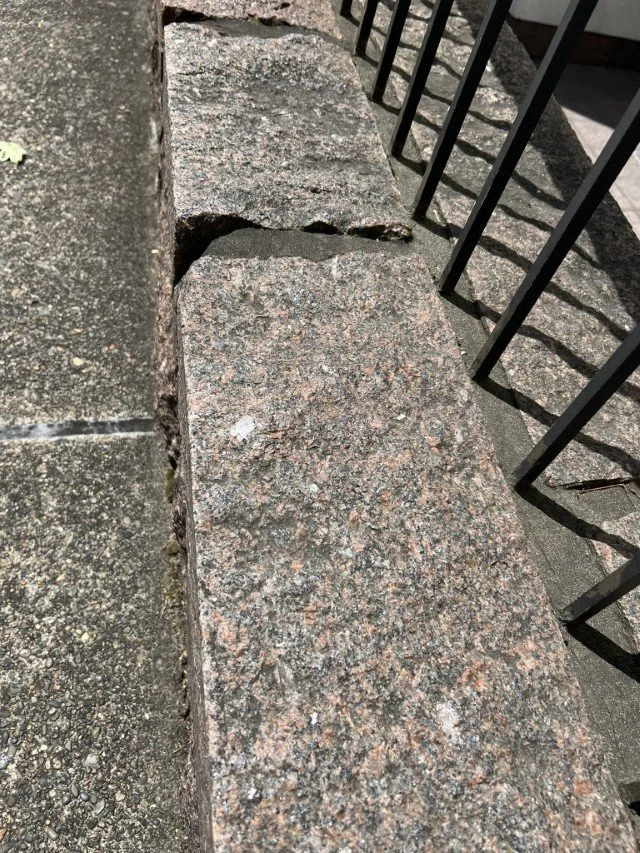
Coarse-grained, roughly dressed granite ashlar masonry walls surround the Standard Plaza and fountain court on the west side. The granite was quarried in the Minnesota River Valley near Rockville, MN. The large pink crystals in the mix are potassium, or alkali, feldspar, white crystals are plagioclase feldspar, glassy gray quartz crystals and black mica crystals. The presence of potassium feldspar mark this as a true granite, unlike a diorite or granodiorite. Note that some of the alkali feldspar crystals are twinned, with a joint running down the center of the crystal, similar to that seen in a popsicle. The west lobby has examples of both slate and travertine.
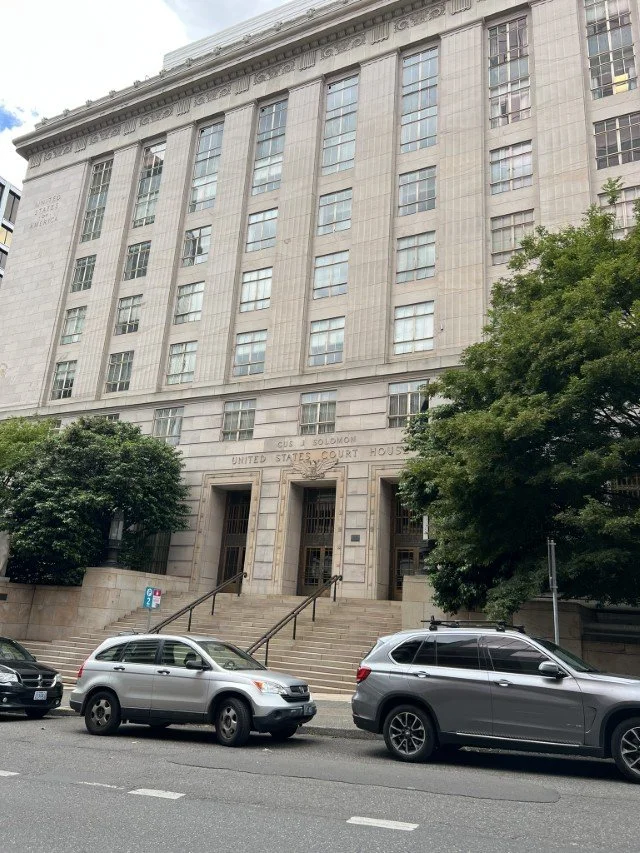
5. Gus J. Solomon Courthouse Building (1933)
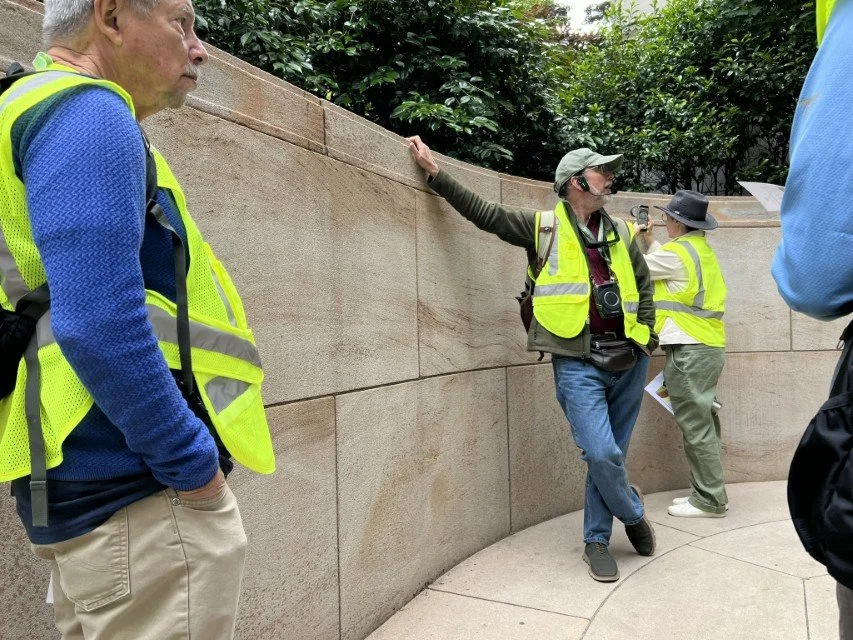
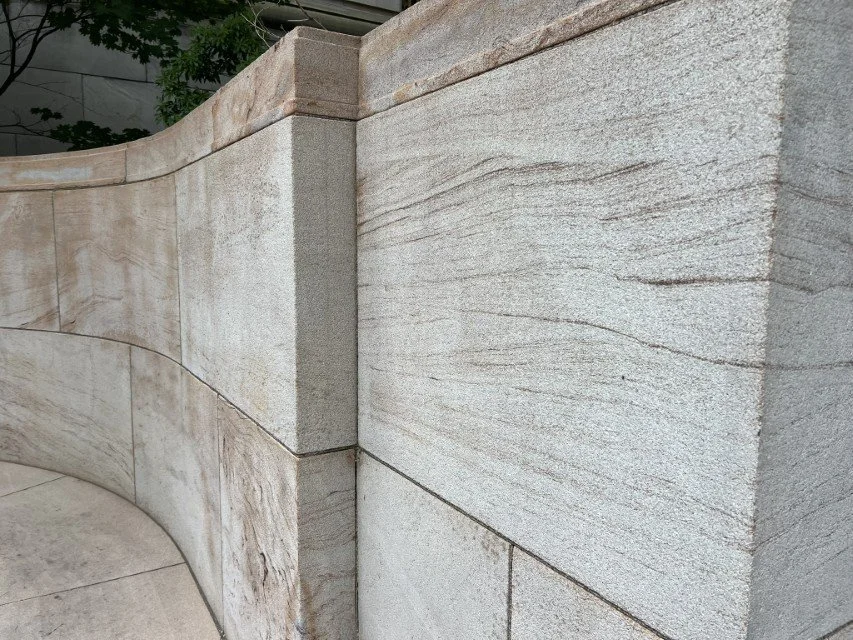
The walls of this former federal courthouse are Washington state Wilkeson sandstone. This is the second type of sedimentary rock encountered on the tour. The cemented sand grains sparkle indicating that the original sand crystal has been surrounded by a second zone of later crystallization. The source here appears to be fluvial (river). The sand grains in this “arkose” sandstone resulted from the weathering of quartz and feldspar rich granitic rock. Red lines are iron oxide. The north side has many excellent examples of both cross-bedding and exfoliation.
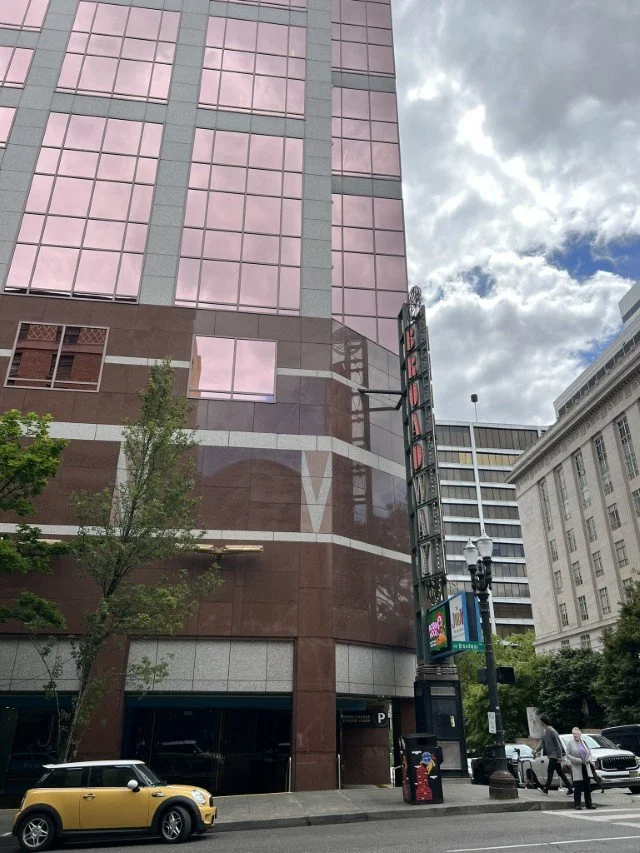
6. 1000 Broadway Building (1991)
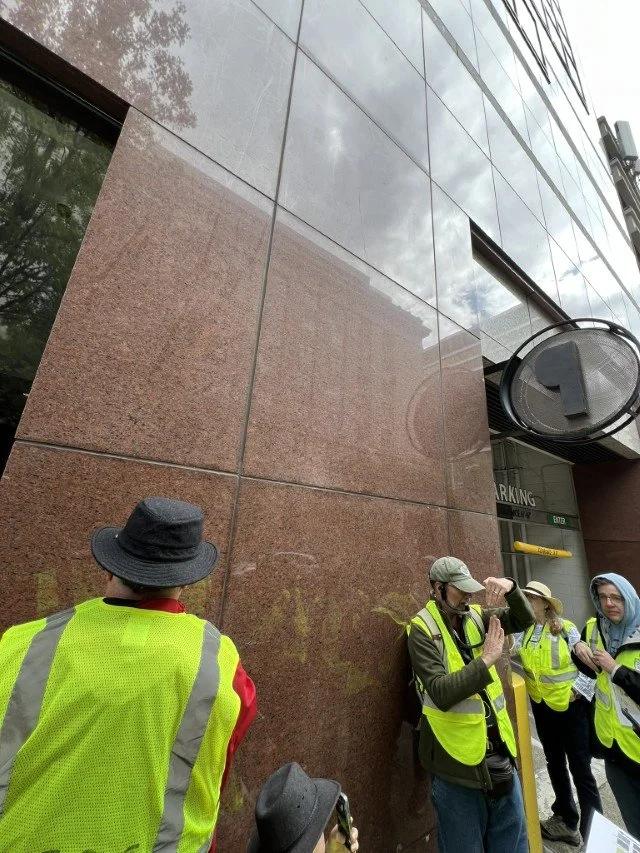
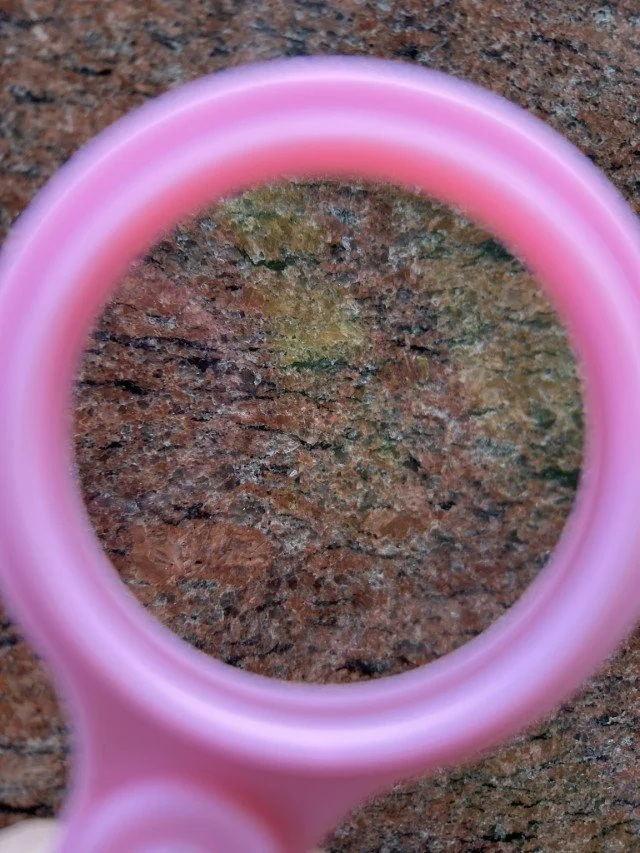
This tall building’s lower floors are faced with an international thin cut ashlar of granite gneiss. Gneiss is a metamorphic rock formed under great heat and pressure. This orthogneiss was formed by the metamorphism of an igneous rock, in this case, granite. The dark foliated minerals are micas and amphiboles which have reoriented themselves perpendicularly to the direction of pressure on the metamorphosing rock.
Overhead at the box office is a pretty Sardinian granodiorite containing both alkali and plagioclase feldspar. This granodiorite was formed deep underground during the creation of the supercontinent Pangaea (Appalachian-Hercynian orogeny) during the late Paleozoic, however it has only been brought up to the surface in Sardinia due to the much more recent (past 200 million years) collision of the Eurasian plate with the African plate. The zoned crystals in Sardinian granite show evidence of two stages of cooling.
7. Arlene Schnitzer Concert Hall (1928)
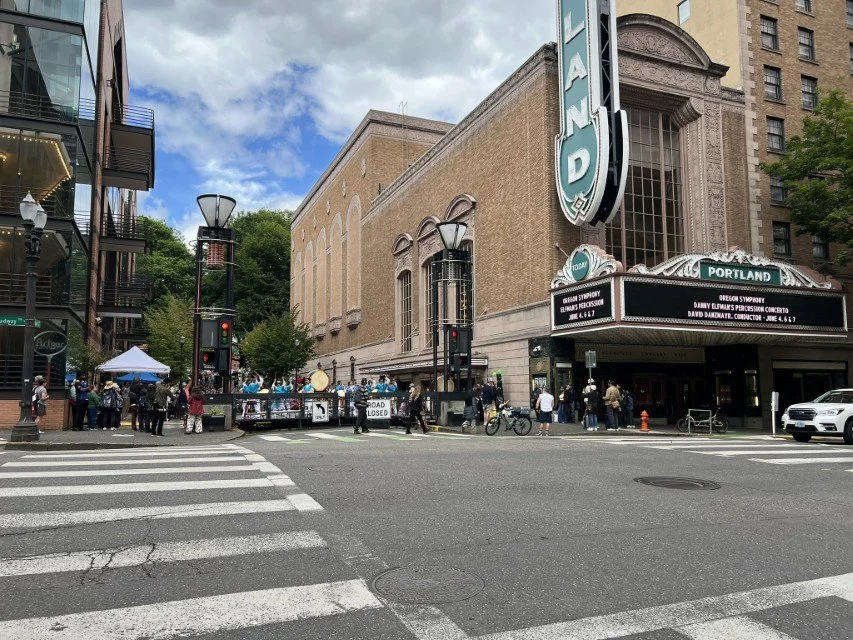
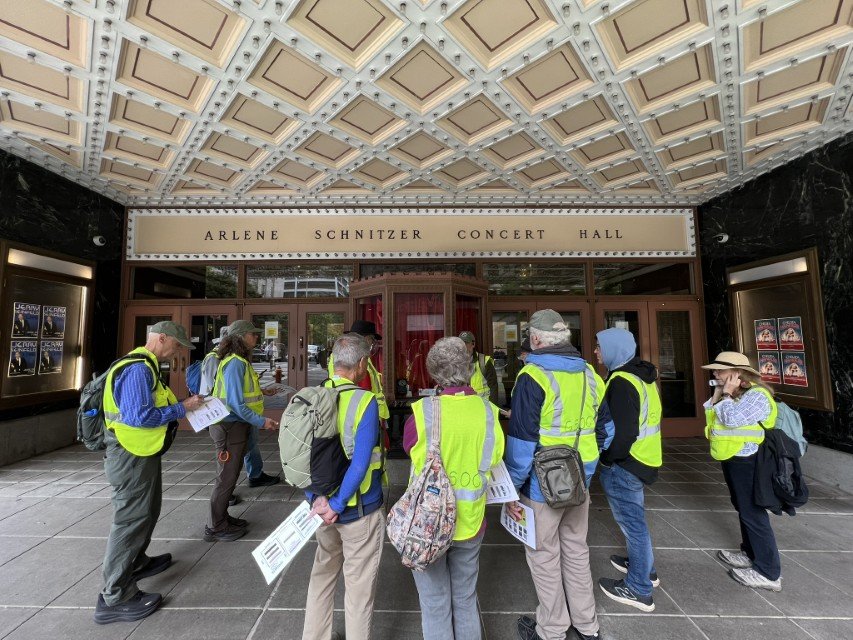
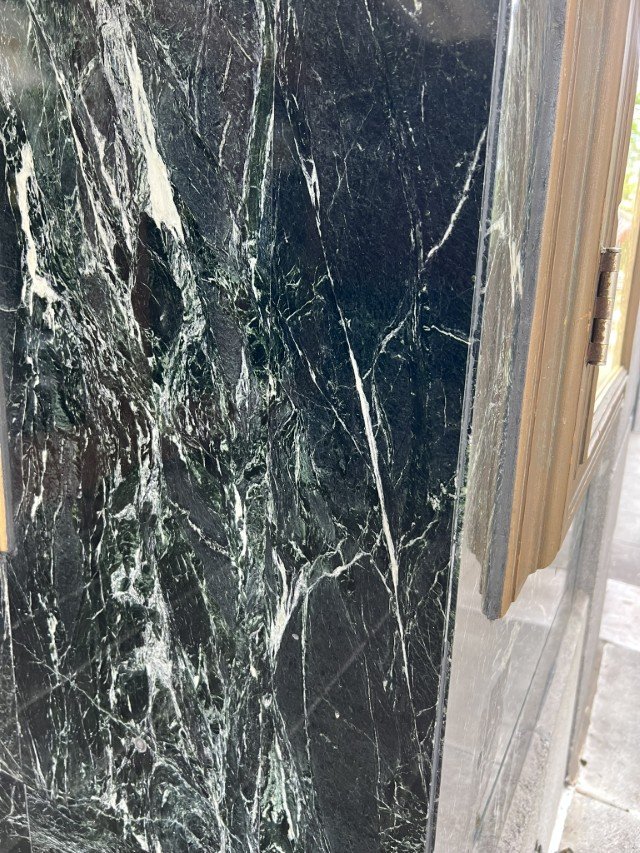
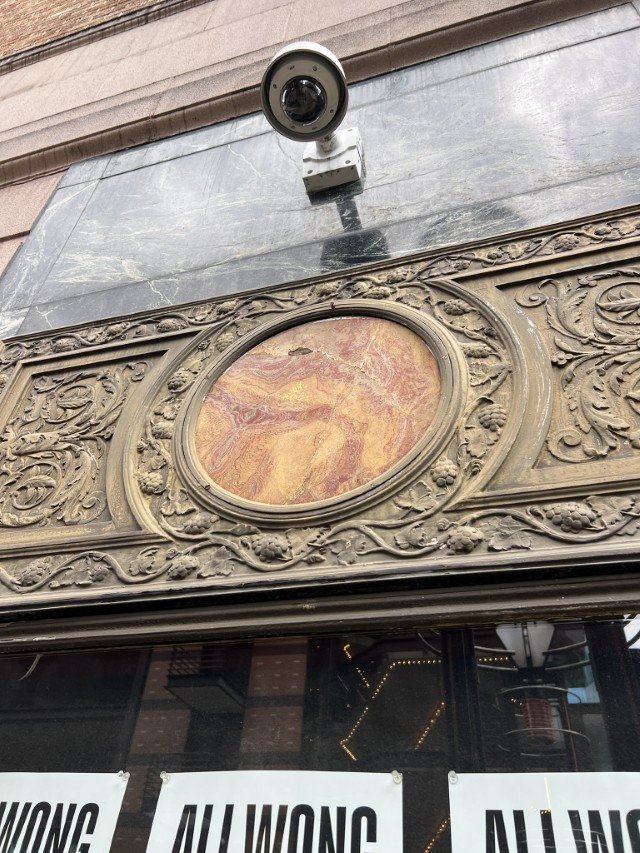
The box office of the Schnitzer contains various green and brown “marbles” — however the composition and origin of each is very different — and each rock type (igneous, sedimentary, and metamorphic) is represented. The brown marble is our metamorphic rock. It is similar to the earlier limestones on this tour, showing white calcite veins and sharp-edged breccia. The igneous rock is the dark green “Verde Antiqua” serpentinite. It is ophiolitic, which means it was part of the layer-cake ocean crust that accretes on either side of an ocean spreading center. During its time under the sea, seawater percolated through it and deposited the calcite veins one sees today. Finally, our sedimentary rock, jasper, is found in the round ornament just to left of the entrance. Other veining may be due to impurities such as sand, mud, clay, and iron oxide.
8. First Congregational Church (1895)
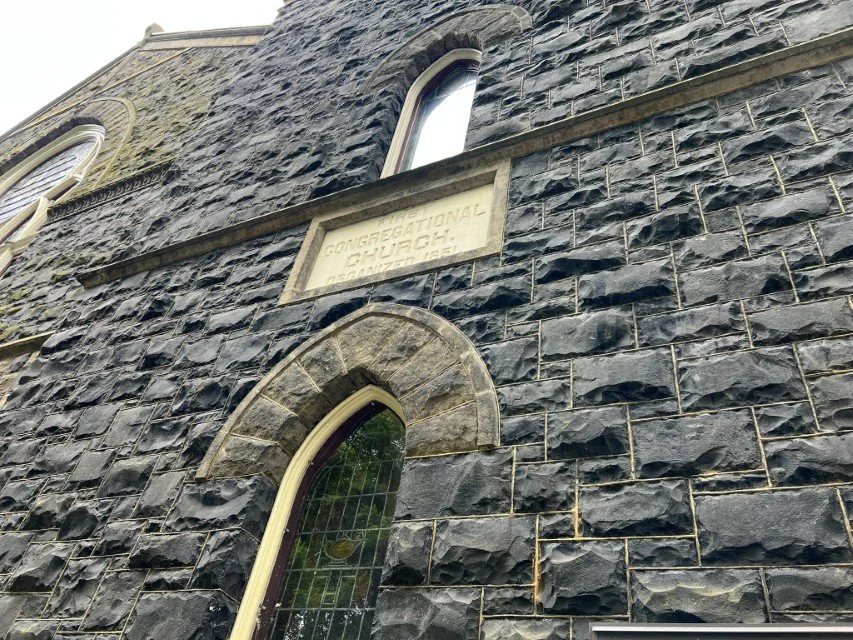
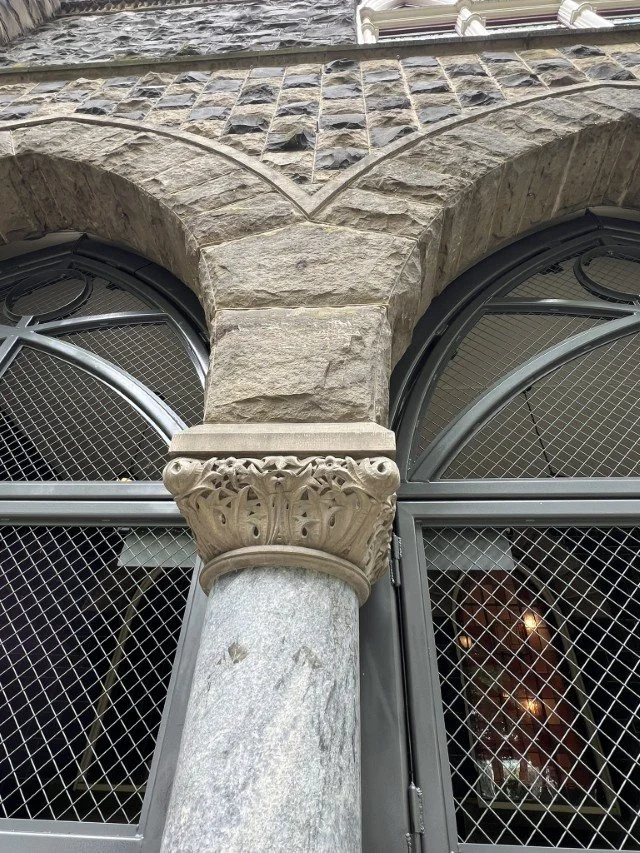
Our only Northwest natives so far, basalt from Oregon and sandstone from Tenino, Washington make up the walls of the First Congregational Church. The basalt is from one of the Columbia River Basalts, which were all formed by huge lava flows which came from massive rifts in central Oregon over the Miocene era (14-17 mya). Note the conchoidal (curved) fracturing of the basalt. Large translucent calcite crystals are visible in the pillars at the front of the church. Green epidote or pyroxene is visible inside the crystals.
9. Oregon Historical Society (1966)
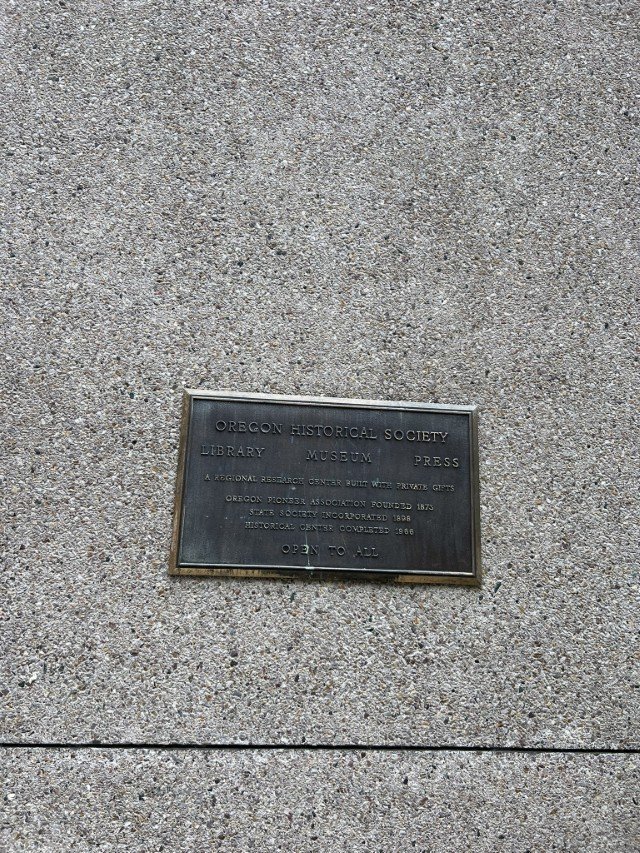
This precast concrete building houses the Oregon Historical Society’s museum. It is instructive to observe that the aggregate in the cement matrix is crushed natural stone, and in particular this aggregate contains yellow quartzite in an interesting mix.
10. Former Oregonian Building (1948)
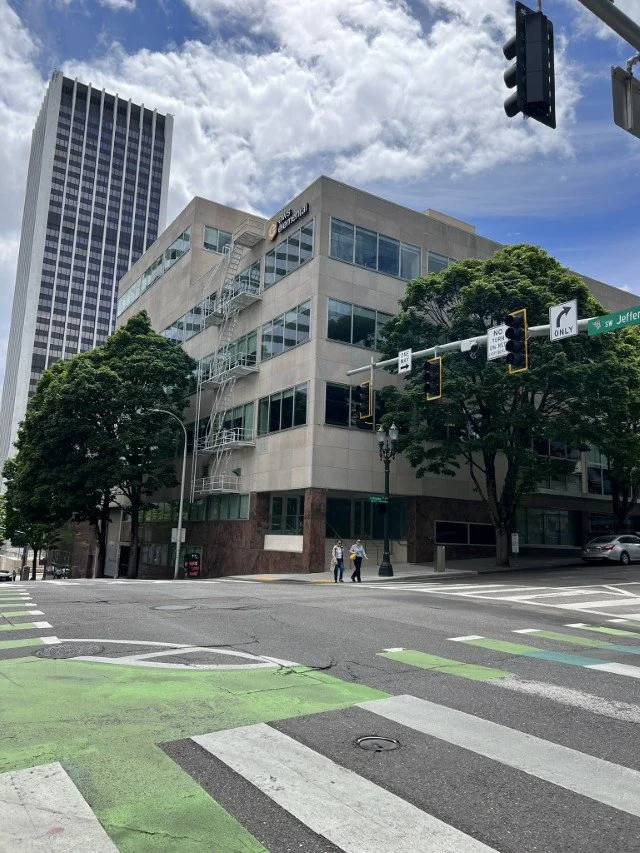
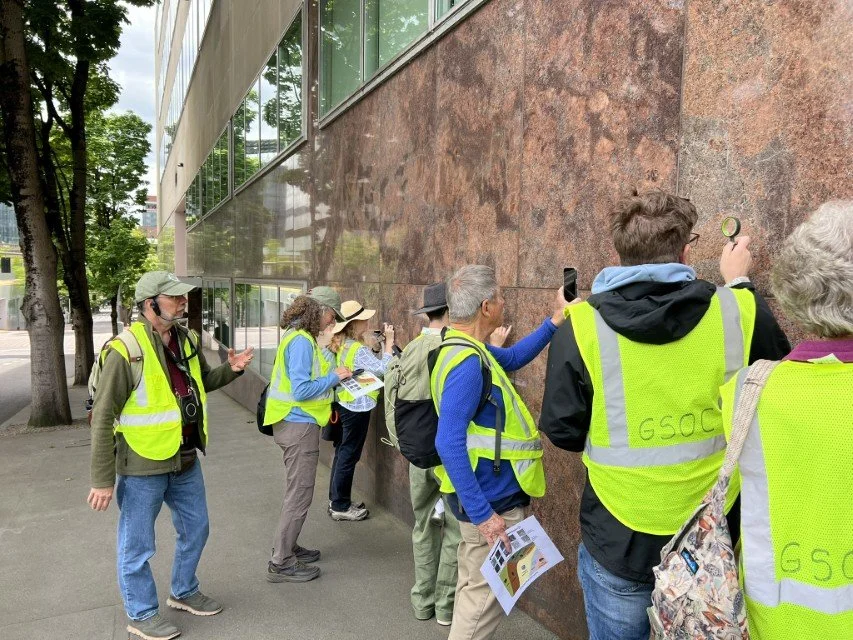
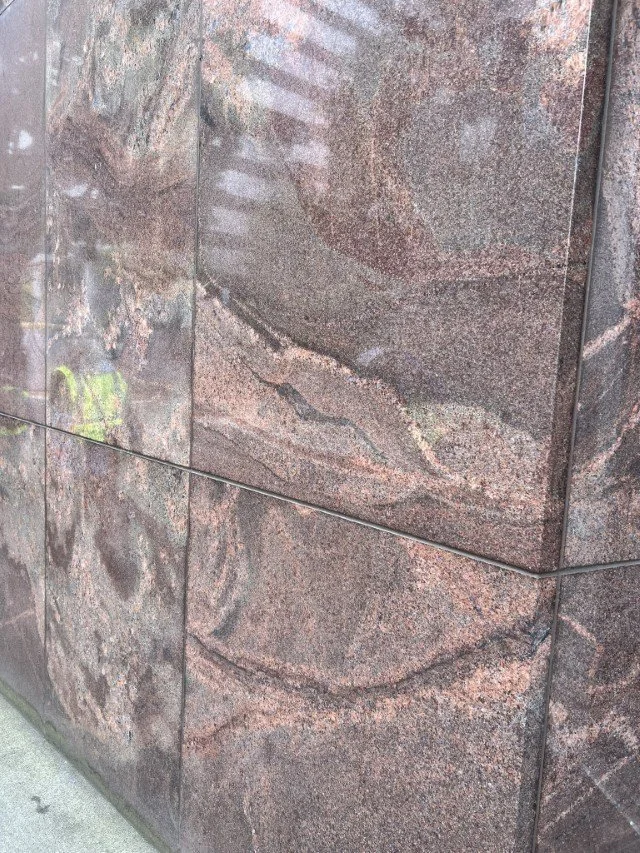
The migmatite face of the former Oregonian Building, designed by important Portland architect Pietro Belluschi, is 1.8 billion years old. Quarried by Cold Springs Granite in Ortonville, MN, the migmatitic gneiss contains intergrown orthoclase and microcline crystals, black mica knots, pegmatite masses, as well as abundant quartz and scattered biotite.” Note the nearly 90° crack which indicates feldspars. (See McKelvey, G. E.; et al., Cornerstones of Spokane—A guidebook to the building stones of downtown Spokane: Northwest Mining Association, 1981.)
11. Plaza on 6th (1965)
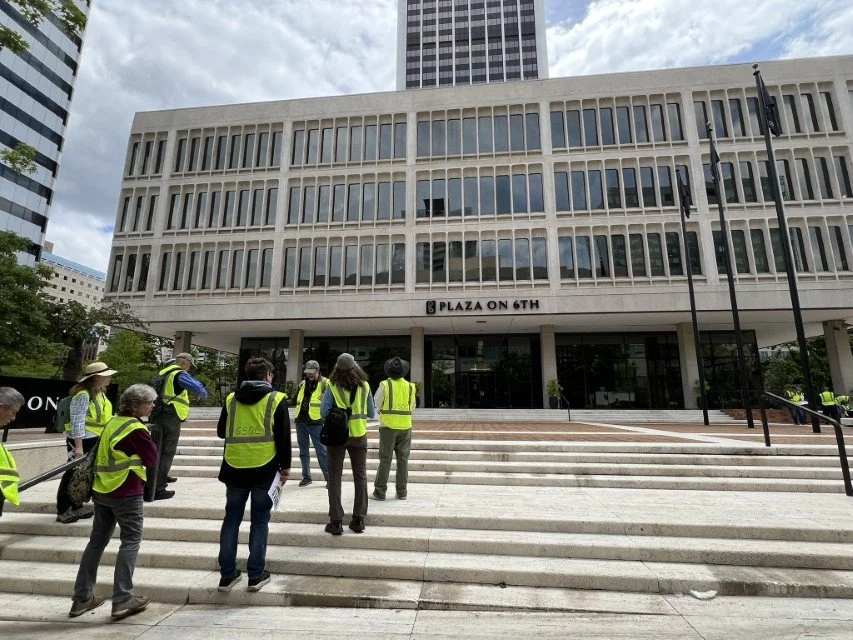
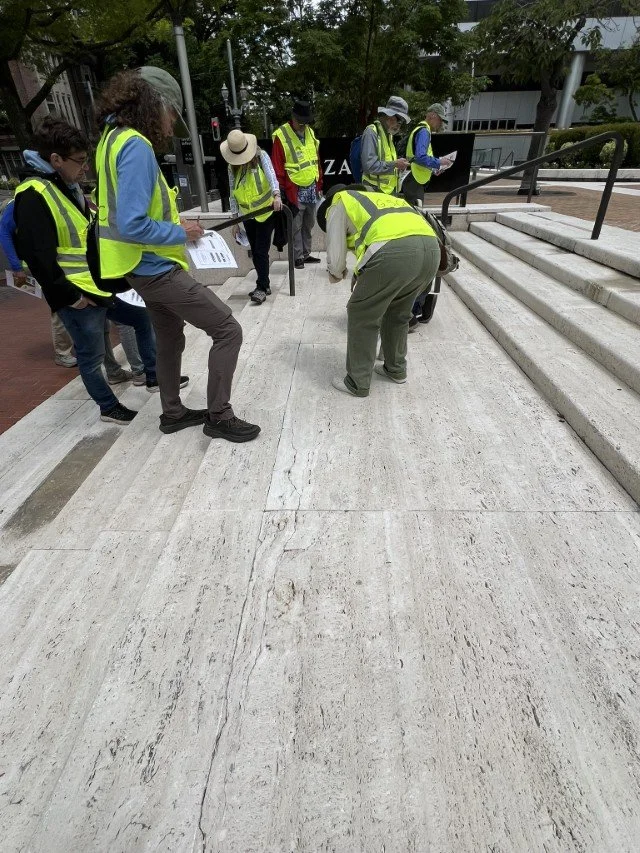
The low courtyard walls and stairs at this building are white travertine, a type of inorganic limestone resulting from the precipitation of calcium carbonate in hot springs and caves. Crystalizing layers and corresponding collapsing “caves” are responsible for the fine dark layers. Thermophilic (heat-loving) bacteria may also play a role in its structure.
12. Wells Fargo Center (1972)
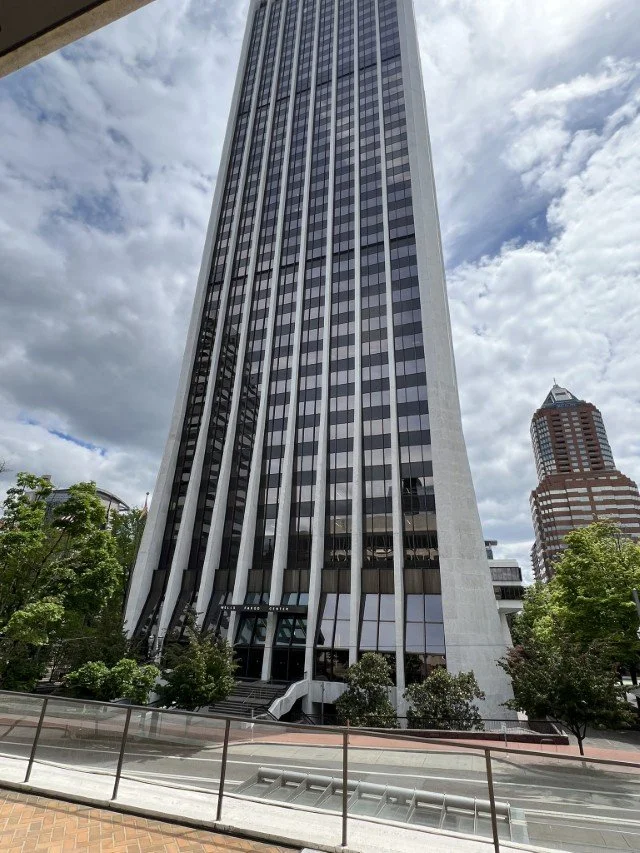
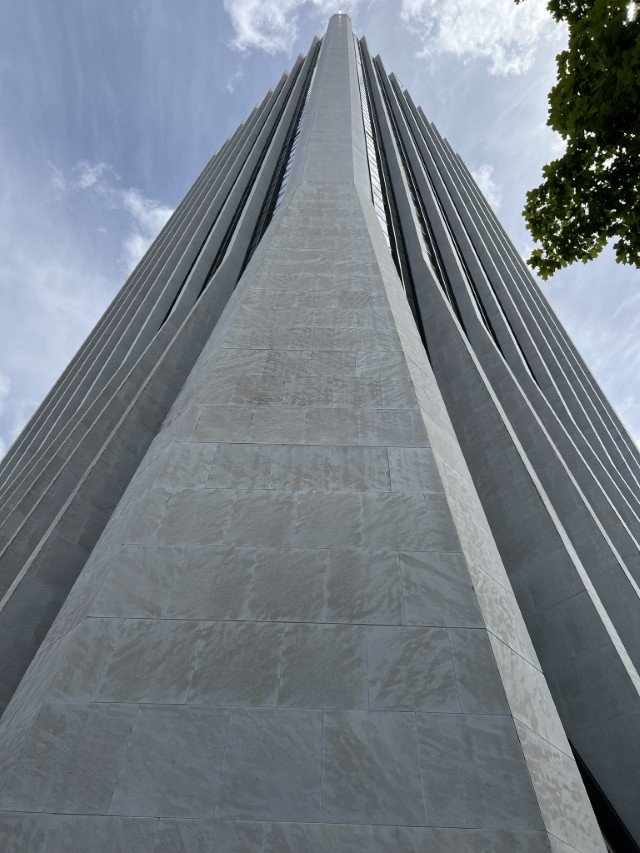
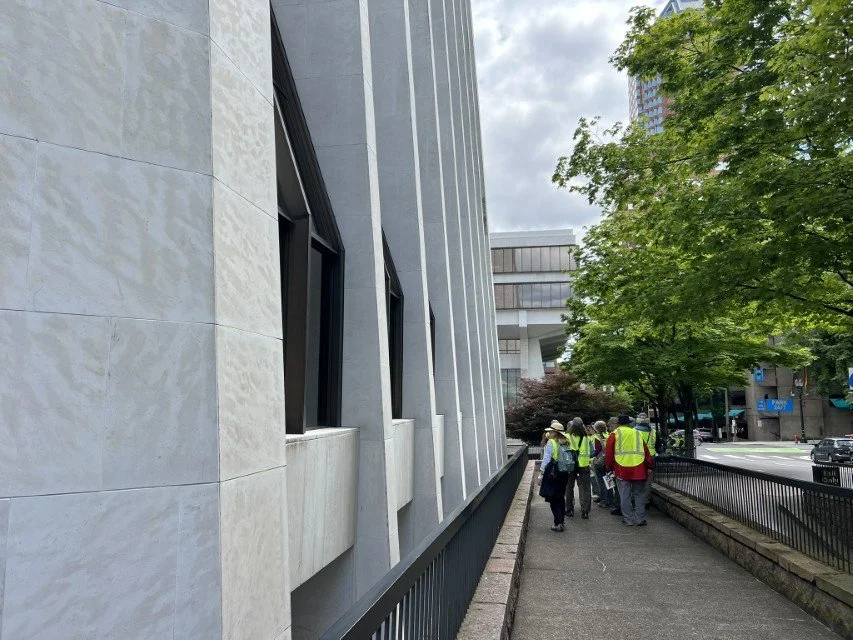
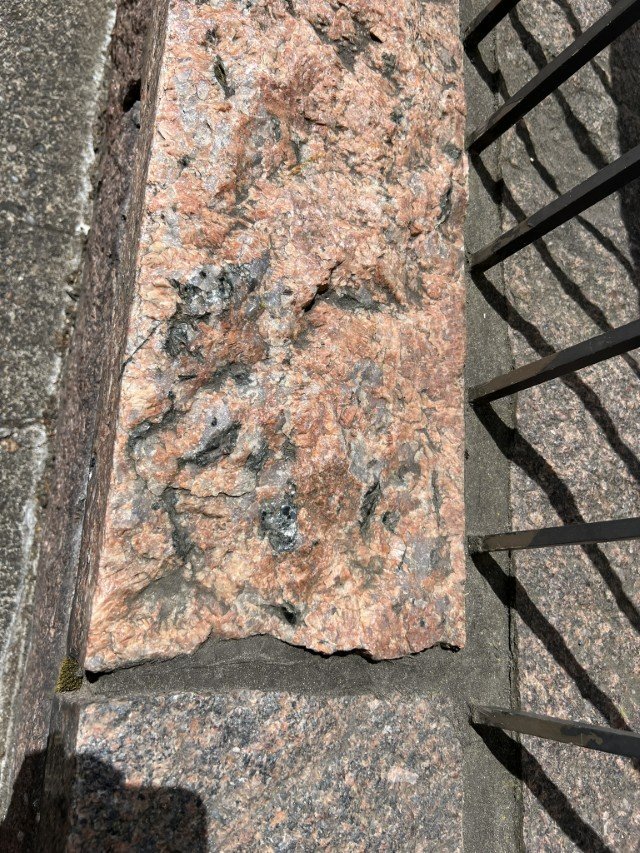
Portland’s tallest building (546 feet) is clad in white Carrara marble. This very pure marble from Carrara, Italy, is the same type of marble used by Michelangelo. The rough granite lower surrounding walls contain several excellent examples of large pegmatite crystals of alkali feldspar, quartz crystals, biotite mica and hornblende. Note the grain orientation in the granite steps which indicates a settling/current flow within the original magma chamber.
13. KOIN Center (1984)
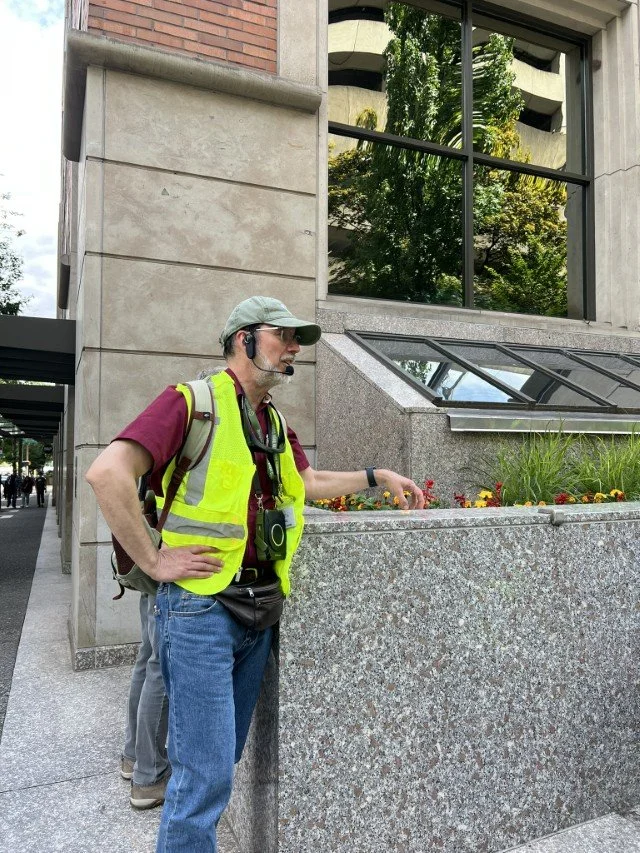
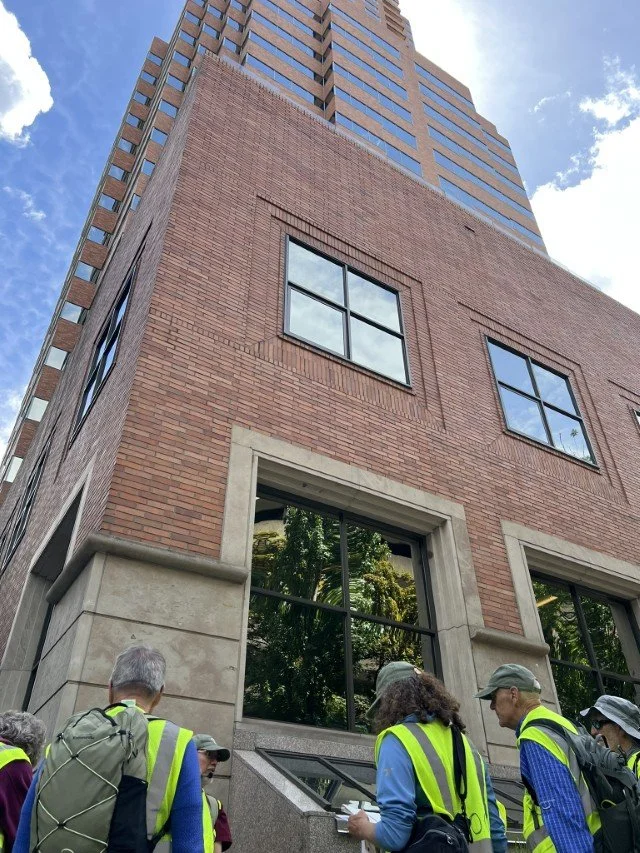
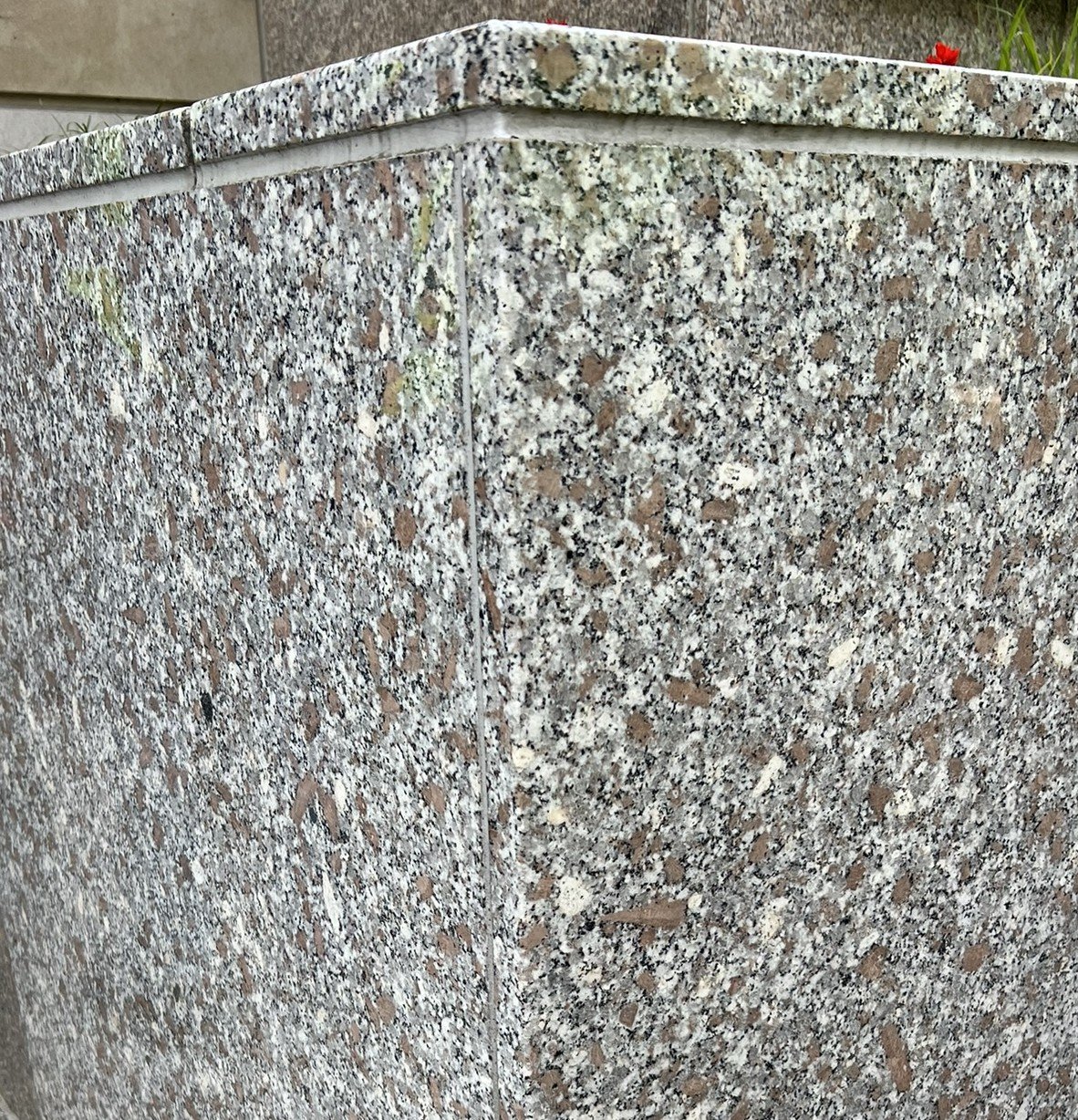
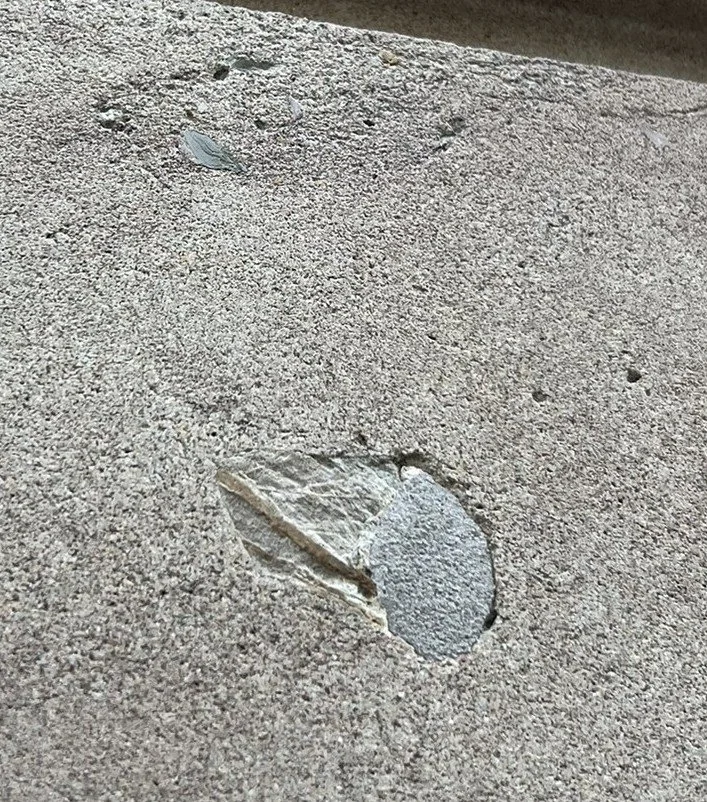
The limestone walls around the base of the KOIN center contain chert, shale and many fossils, including barnacles, sand dollars, clams, snails, bryozoa, and oysters. This biogenic limestone — in comparison to the inorganic travertine seen at the Plaza on 6th building above — is composed of tiny calcareous marine organisms, such as foraminifera – and was once high energy aragonite beach sand. Barnacles here are the key fossils indicating that this limestone was formed in the Eocene, 40-45 mya. The sand dollar echinoderms are all orange-brown because of their selective use of only one type of calcite which is colored by iron oxide. Clam burrows are seen in both side view (as squiggles) and in cross section (as circular/oval incisions). Green chert nodules are formed in part by the diagenesis of silicon dioxide from single-celled diatoms and radiolarians. The base of courtyard fountain is rare orbicular granite made up of concentrically layered spheroids. Though the exact process is unknown, the spheroids may be formed around a nucleus in a cooling magma chamber.
14. Multnomah County Justice Center (1983)
Heading north on Third Avenue from the KOIN Center, notice the rust-colored post-modern style Italian travertine pillars in front of the Justice Center.
15. Pioneer Place Mall Lunch Stop (1990)
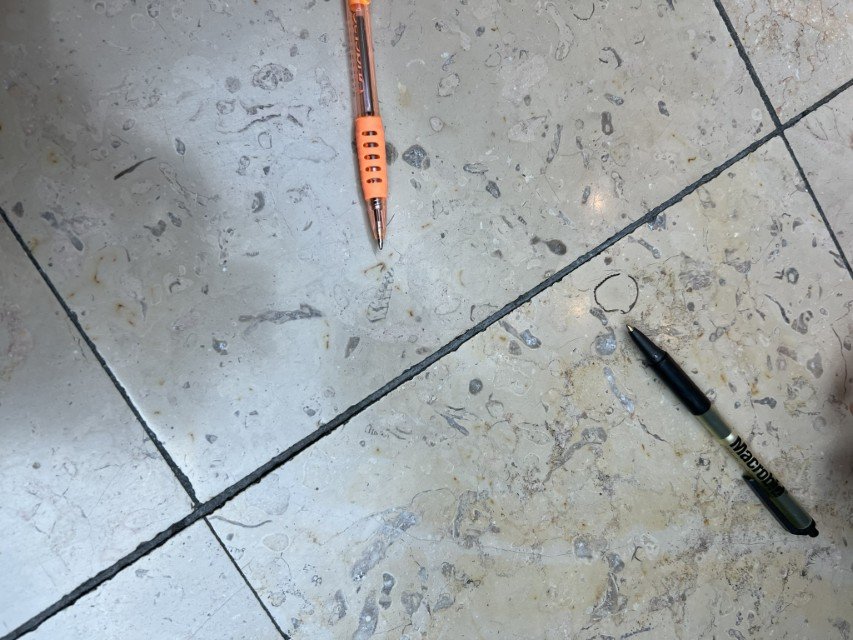
Fossil clams, snails, and corals can be found in the light brown floor tiles of the lower floor of the Pioneer Place Mall The tiles are Early Jurassic period Comblanchien Limestone from the Burgundy region of France near the Jura mountains. The 199-145-million-year-old (Ma) limestone was formed in the warm equatorial waters of the shallow Tethys Sea — a superhighway for bottom dwelling animals, such as snails (gastropods), clams (pelecypods), coral (cnidaria), and “moss animals” (bryozoa).
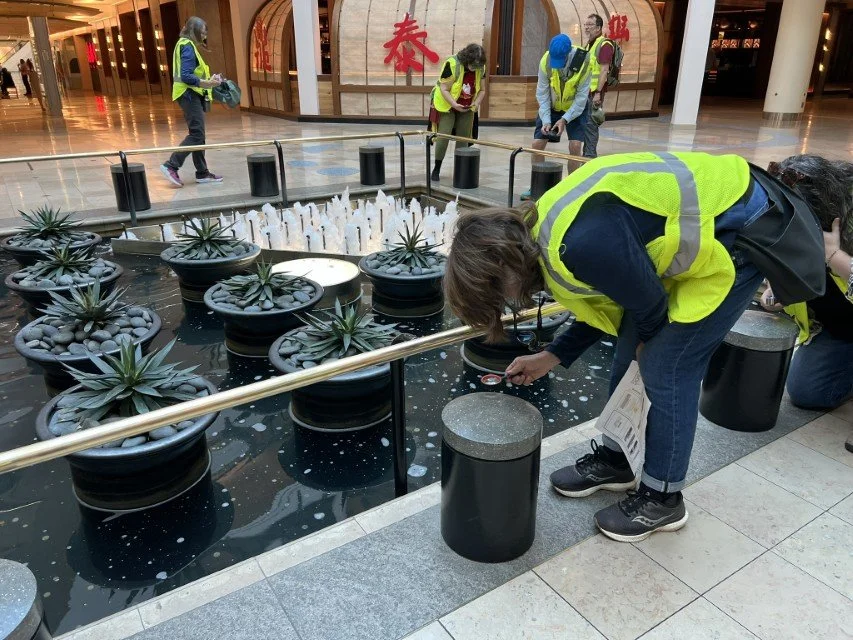
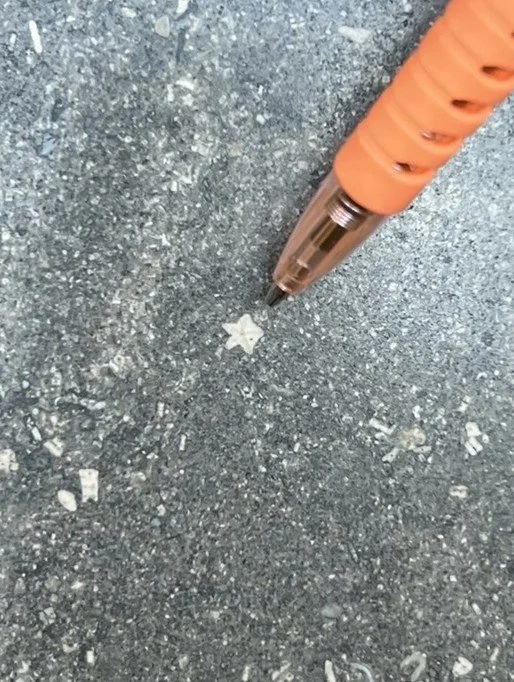
Burrowing creatures leave behind fossil burrows of colored red by iron oxide. Glassy spaces are hollows that have been filled with calcite. Concentric growths are algae (sometimes with coral inside). Look for triangular-shaped belemnites — the internal skeletons of an extinct species of squid — which are used by geologists as an “index fossil” to determine the geologic age of the limestone. Clam and turritella shells can be seen in various cross sections. The wall near the escalator at the S.W. 5th and Taylor entrance is especially fossil rich. The black limestone tiles and bollard caps contain fossils of tiny Sea Lilies. They appear star-shaped in cross-section. These crinoid fossils are another example of a Jurassic index fossil. Look also for flakes of glittering pyrite.